Skip to content

Spinal Decompression Therapy in Palmetto, Georgia

Back pain can keep you from work, rest, and daily movement in Palmetto. We explain whether spinal decompression therapy fits your needs before care begins.

Licensed & InsuredSame-Day ServiceUpfront, Transparent PricingServing 35 Communities

Quick Summary: Spinal decompression care in Palmetto, Georgia

The service includes a health review, suitability check, and clear treatment discussion before care.

  • What we do: Arrowhead Clinic - Lithia Springs provides spinal decompression therapy for eligible patients in Palmetto, Georgia.
  • What is included: Care includes symptom review, treatment planning, spinal decompression, and progress checks.
  • What you get: The patient receives a clear care decision based on symptoms, health history, and treatment fit.

Can spinal decompression therapy help herniated discs?

Spinal decompression therapy may help some people with herniated discs, but suitability depends on the health history, symptoms, and clinical findings. The first visit helps identify nerve pressure, disc-related concerns, and warning signs that need another type of care. Results vary, so treatment goals and progress checks remain part of the discussion.

Spinal Decompression Therapy for Palmetto Back Pain

This page is for people asking whether disc-related symptoms call for spinal decompression therapy. The main decision is fit, not a promise of results.

A health history and exam help us review herniated discs, disc bulges, nerve compression, and related symptoms. We may discuss X-rays if clinically indicated, then explain the findings before a treatment plan is set.

The service is not the right choice for every condition. Severe or unusual symptoms may need medical assessment or another form of care, so we address those concerns before treatment.

  • Review symptoms that may relate to a herniated disc or disc bulge.
  • Discuss nerve compression and movement limits during the health history.
  • Confirm whether spinal decompression fits the person’s condition.
  • Explain treatment options before care begins.
  • Set a plan for progress re-examination.
A woman writes on a clipboard while talking with a man in a cozy living room

Service Overview

Spinal decompression therapy is a non-surgical treatment that uses controlled traction to reduce pressure through the spine.

  • It differs from chiropractic adjustment because traction focuses on gentle spinal unloading, while an adjustment uses a directed joint movement.
  • Our team provides this care for people seeking treatment in Palmetto.

What this treatment may change

Controlled traction may reduce mechanical stress around some disc-related concerns.

A focused assessment helps connect symptoms with the right treatment choice.

Clear explanations give you a better basis for deciding on care.

Treatment planning keeps the approach tied to your health history and goals.

Follow-up checks help us review individual response over time.

Process

How we plan and provide spinal decompression care

1

Complete the new patient intake

We record your symptoms, health history, prior care, and main treatment goals.

2

Review movement and nerve symptoms

The exam looks at movement limits and signs that may relate to disc bulges or nerve compression.

3

Discuss imaging when indicated

We discuss X-rays if clinical findings show that imaging may help guide the care decision.

4

Explain the report of findings

We explain what the assessment shows and answer questions before treatment begins.

5

Set the treatment plan

If the service fits, we outline the proposed spinal decompression approach and follow-up checks.

How we approach spinal decompression decisions

Assessment before traction

We review the health history and exam before discussing spinal decompression. This helps us identify whether the treatment fits the symptoms.

Plain treatment explanations

Our experienced local chiropractic care team explains the purpose of traction, what the visit involves, and what results may vary.

A clear limit on fit

Spinal decompression is not the right service for every condition. Symptoms that need urgent medical attention or a different clinical pathway require another next step.

What spinal decompression care includes

Here's what you get:

  • A new patient intake records symptoms, health history, and treatment goals.
  • A clinical exam helps us assess movement and possible nerve pressure.
  • We discuss X-rays if they are clinically indicated for the case.
  • A report of findings explains what the assessment shows.
  • A personalized treatment plan sets out the proposed care.
  • Progress re-examination checks how the patient is responding.

Comparing traction and chiropractic adjustment

These approaches use different methods, so the assessment helps determine which one fits.

Treatment approachMain methodDecision point
Spinal decompression therapyControlled traction through a spinal decompression tableConsidered when disc-related symptoms and treatment fit support it
Chiropractic adjustmentDirected movement of a spinal jointConsidered when the exam supports an adjustment-based approach

The Arrowhead Clinic - Lithia Springs Standard

  • Tailored Adjustments
  • Spinal Decompression
  • Integrated Therapies
  • Pain And Injury Care

Questions about spinal decompression care

What should be checked before treatment is scheduled?

The health history, symptom pattern, movement, and possible nerve pressure should be checked first. We ask about prior imaging, past care, and changes in symptoms. X-rays may be discussed if clinically indicated. These steps help us decide whether traction-based care is suitable before an appointment is planned.

Who is a good fit for this treatment, and who needs different care?

People with suitable disc-related symptoms may be candidates, while serious or unusual symptoms may need another care path. The exam helps us review herniated discs, disc bulges, and nerve compression. We explain when spinal decompression fits and when medical assessment or another service should come first.

What happens at each stage of treatment?

The treatment plan starts with intake, an exam, and a discussion of findings.

  1. We review your health history and symptoms.
  2. We assess movement and possible nerve pressure.
  3. We discuss imaging when clinically indicated.
  4. We explain the proposed care and follow-up checks.

Each stage supports a clear treatment decision.

How does an adjustment differ from spinal decompression?

A chiropractic adjustment uses a directed joint movement, while spinal decompression uses controlled traction. Both approaches require a review of the person’s symptoms and health history. We explain which approach fits the findings and goals discussed during the visit.

Which symptoms should lead to medical care first?

Severe, sudden, worsening, or unusual symptoms should receive medical attention before elective spinal care. Weakness, major changes in sensation, or other warning signs need careful assessment. We discuss these concerns during intake and help clarify whether spinal decompression is an appropriate next step.
Contact

Discuss spinal decompression care in Palmetto

The first days after reaching out can focus on gathering your health history, confirming appointment details, and understanding what the assessment includes.

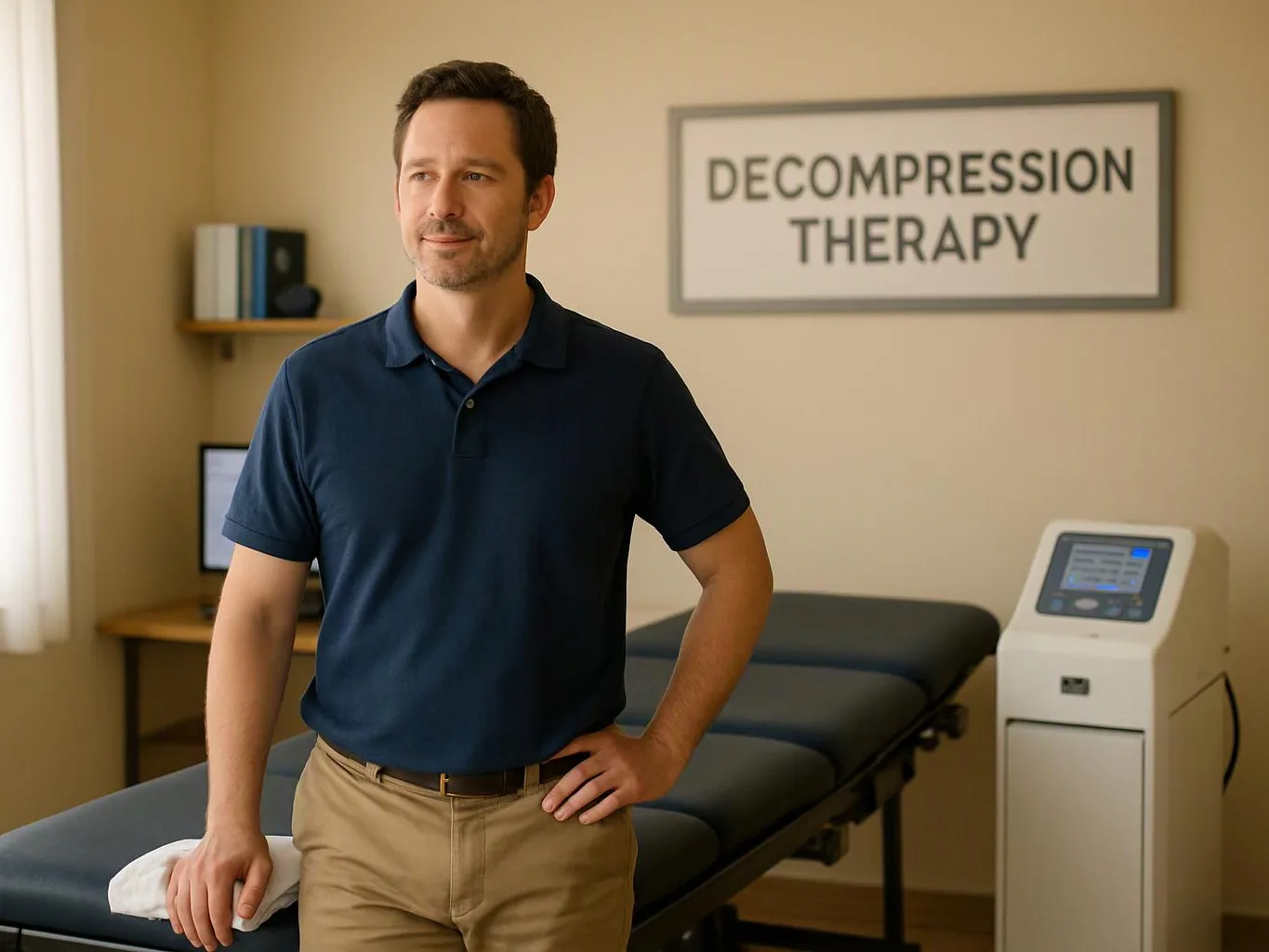
A man stands beside a therapy table in a room with a sign reading decompression therapy

ZIP Codes We Serve in Palmetto, Georgia

30268

The health and wellness information on this website is for general informational purposes only and is not medical advice. It does not create a provider-patient relationship. Individual results vary.

(770) 501-7716