
What Is Occlusion?
Occlusion is the way your upper and lower teeth meet when your mouth closes or moves. It includes the points of contact during biting, chewing, speaking, and jaw motion. A balanced bite distributes pressure across the teeth and jaw, while an uneven bite can affect muscle use and joint movement.
Quick Facts About Occlusion
Category
Dental and jaw function
Used for
Understanding bite and TMJ function
Common confusion
It is more than tooth alignment
Also called
Bite alignment, Bite
Often discussed with
TMJ Treatment
Key Takeaways About Occlusion
- Occlusion includes tooth contact during closing and movement.
- Bite contact can affect chewing and jaw motion.
- Occlusion isn’t the same as tooth alignment alone.
How Occlusion Works
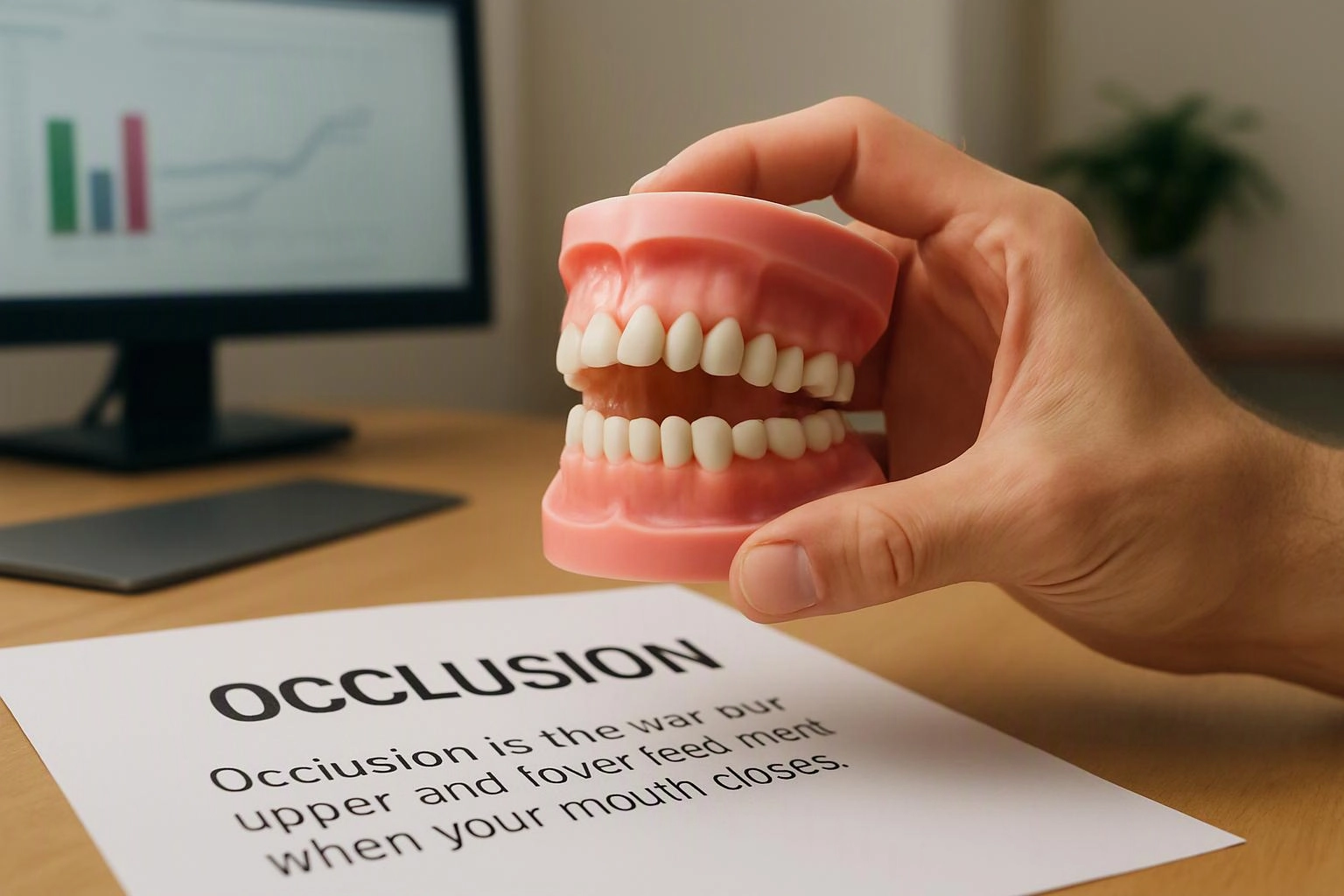
Occlusion works through contact between the upper and lower teeth. That contact guides the jaw as you close, chew, speak, or move it side to side. The pattern can change how pressure travels through the teeth, jaw muscles, and temporomandibular joint.
Related glossary terms: Bruxism, Joint Mobility, Muscle Spasm.
A clinician checks occlusion by observing your bite and jaw motion. They may look for early tooth contact, uneven pressure, jaw deviation, or muscle tenderness. These findings help show how the bite relates to TMJ symptoms, such as jaw fatigue, clicking, or discomfort during chewing.
Occlusion in TMJ Care
Occlusion is one part of a TMJ assessment. It is reviewed with symptoms, movement, and muscle findings. A bite pattern does not explain every jaw problem, so the full assessment guides the next step.
From the Arrowhead Clinic - Lithia Springs team
When we assess occlusion during TMJ Treatment, we observe how the teeth meet and how the jaw moves. We also consider muscle tension, joint motion, and the symptoms you describe. Our team uses these findings to understand the jaw’s function and plan care around the full exam.
Occlusion in Practice: A Real-World Example
During a TMJ Treatment visit, a person may notice that one side of the teeth touches before the other side. The clinician checks that contact along with jaw movement and muscle tension to see how the bite relates to chewing discomfort.
Related Services
Related Terms
Bruxism
Bruxism is repeated clenching, grinding, or tightening of the teeth and jaw muscles. It can happen…
Joint Mobility
Joint Mobility is the amount and quality of movement available at a joint. It describes how…
Muscle Spasm
A muscle spasm is a sudden, involuntary tightening of muscle fibers that can cause pain, stiffness…
Range Of Motion
Range Of Motion is the amount a joint can move in different directions. A shoulder's range…
Arrowhead Clinic - Lithia Springs
Have Questions About Occlusion?
Contact Arrowhead Clinic - Lithia Springs for practical guidance on Occlusion and related chiropractor work in Lithia Springs.