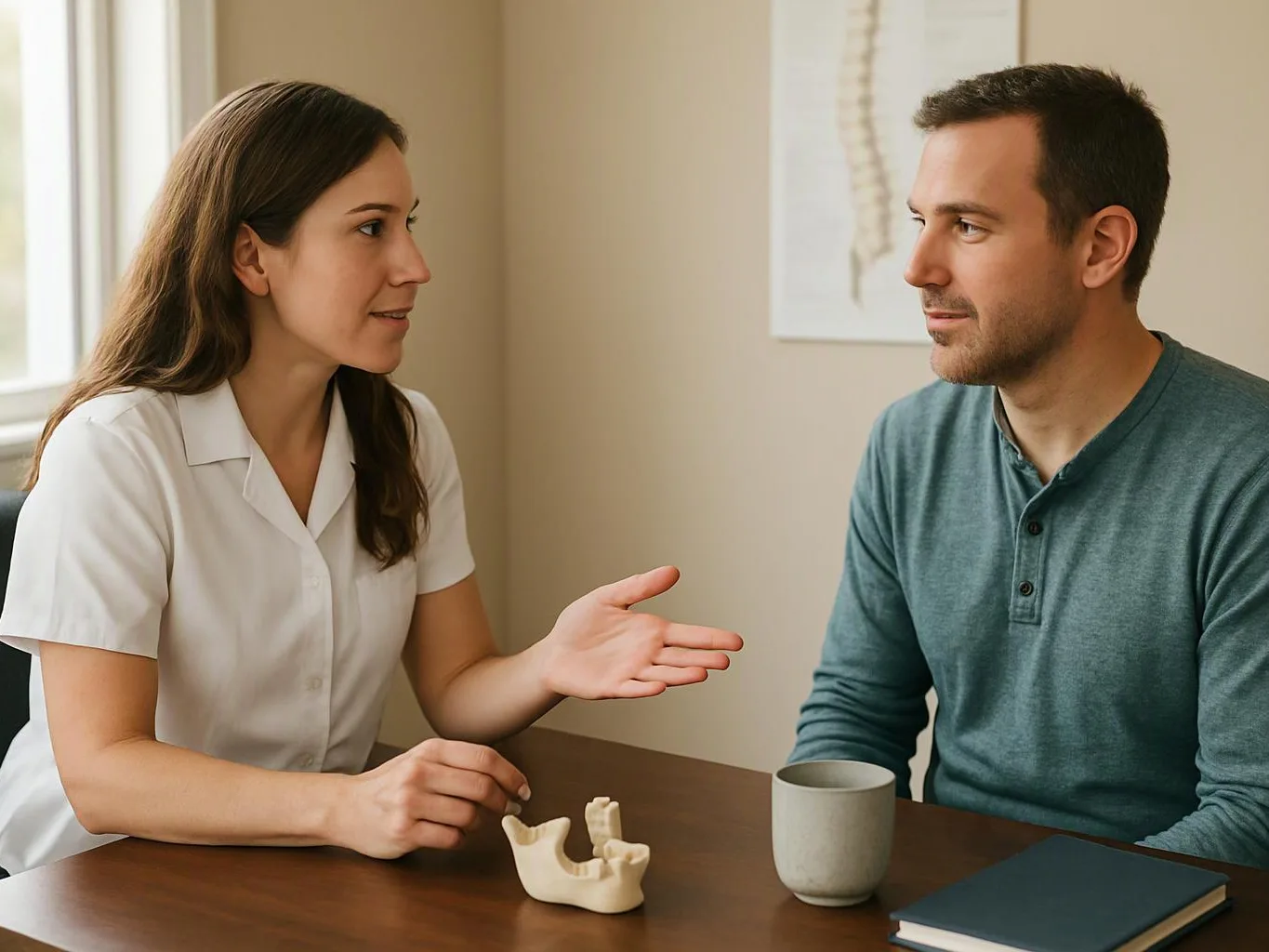
Share your jaw symptoms
During the new patient intake, we record pain, clicking, chewing limits, clenching, headaches, neck symptoms, and your recovery goals.
Jaw pain, clicking, and tension can affect eating, speaking, and sleep. We provide same-day appointments and clear care guidance for patients in Lithia Springs.
You get a clearer explanation of jaw pain, clicking, and movement limits.
Your care plan connects jaw symptoms with related neck, facial, and muscle tension.
You learn practical exercises and care steps that support comfortable daily movement.
A progress re-examination can show whether the plan still fits your recovery goals.
TMJ Treatment is a care plan that addresses pain, tension, and movement problems in the temporomandibular joint.

TMJ treatment begins with the problem you feel, such as pain near the jaw, clicking, facial tension, or trouble opening your mouth. We also ask about chewing, sleep, headaches, neck pain, and habits that place repeated strain on the joint. Our team may use chiropractic adjustments, soft tissue therapy, massage therapy, rehabilitation, and therapeutic exercise. Diagnostic services, including 3D X-ray technology, may support care when the clinical findings call for more information. A key risk is treating jaw symptoms without checking the pattern behind them. Repeated clenching, poor neck mechanics, or a change in jaw motion can keep symptoms active. We explain the findings and set clear next steps before treatment begins. Results vary between patients. TMJ care does not replace medical or dental care when a separate condition needs assessment, and we coordinate appropriate referrals when applicable.
During the new patient intake, we record pain, clicking, chewing limits, clenching, headaches, neck symptoms, and your recovery goals.
We assess jaw movement and related areas, then consider diagnostic services such as 3D X-ray technology when clinical findings support imaging.
We explain the report of findings in plain language, including possible contributing factors and signs that need another type of care.
The plan may include chiropractic adjustments, massage therapy, soft tissue therapy, rehabilitation, or therapeutic exercise based on your needs.
A progress re-examination helps us compare symptoms and jaw function with your goals, so recommendations stay tied to your response.
Free consultations help you discuss your concerns before treatment. We explain what the recommended care includes and how to request an exact quote.
A few details can help us understand your symptoms and plan the first visit.
We shape each jaw care plan around your symptoms, clinical findings, daily needs, and recovery goals.
We explain the jaw evaluation, findings, recommended care, and relevant risks before treatment begins.

Awesome staff and awesome care team! I definitely feel like my needs are heard and listened to- I also got misdiagnosed at the ER and they were able to give me a proper diagnosis and proper care. The staff is so kind, helpful and supportive!

Highly recommended Very Nice and Friendly, I felt welcomed overall its a good place to get treated for your pain!!!!

I had an excellent experience at Arrowhead Clinic! The staff was friendly, welcoming, and really took the time to listen to my concerns. The doctors were knowledgeable and explained everything clearly, which made me feel comfortable and cared for. The clinic is clean, well-organized, and I never had to wait long to be seen. I’m already feeling so much better thanks to their treatment and support. I’d definitely recommend Arrowhead Clinic to anyone looking for quality care.
Your first deliverable is a focused review of your symptoms, history, and care options. Arrowhead Clinic - Lithia Springs offers free consultations and same-day appointments during weekday office hours.
A jaw that clicks and hurts during meals needs more than a quick symptom label. The exam should check movement, muscle tension, neck mechanics, and the pattern of pain. Bring notes about foods or habits that worsen it, then schedule an evaluation so we can explain what we found and outline a care plan.
Jaw tightness can follow an accident, sports injury, or sudden strain, especially when neck pain appears too. The injury history matters because treatment must match the findings and recovery goals. Our team reviews the full history, considers imaging when clinically indicated, and coordinates referrals when another type of care is appropriate.
Recurring jaw pain can continue when clenching, sleep habits, or muscle tension go unchecked. A useful visit connects the symptom pattern with jaw motion and related facial or neck tension. Write down when symptoms flare, ask about the evaluation process, and use the consultation to decide whether a personalized plan fits.