
What Is Bruxism?
Bruxism is repeated clenching, grinding, or tightening of the teeth and jaw muscles. It can happen while you are awake or asleep. Some people notice jaw soreness, tooth wear, facial pain, or morning headaches. Others have no clear symptoms. Bruxism often relates to stress, bite patterns, sleep problems, or muscle tension.
Quick Facts About Bruxism
Category
Jaw muscle activity
Used for
Understanding clenching and grinding
Common confusion
Not the same as TMJ disorder
Also called
Teeth grinding, Jaw clenching
Often discussed with
TMJ Treatment
Key Takeaways About Bruxism
- Bruxism may happen during sleep or while you are awake.
- Jaw tension can occur even without obvious tooth grinding.
- Bruxism isn't the same as a jaw joint disorder.
How Bruxism Works
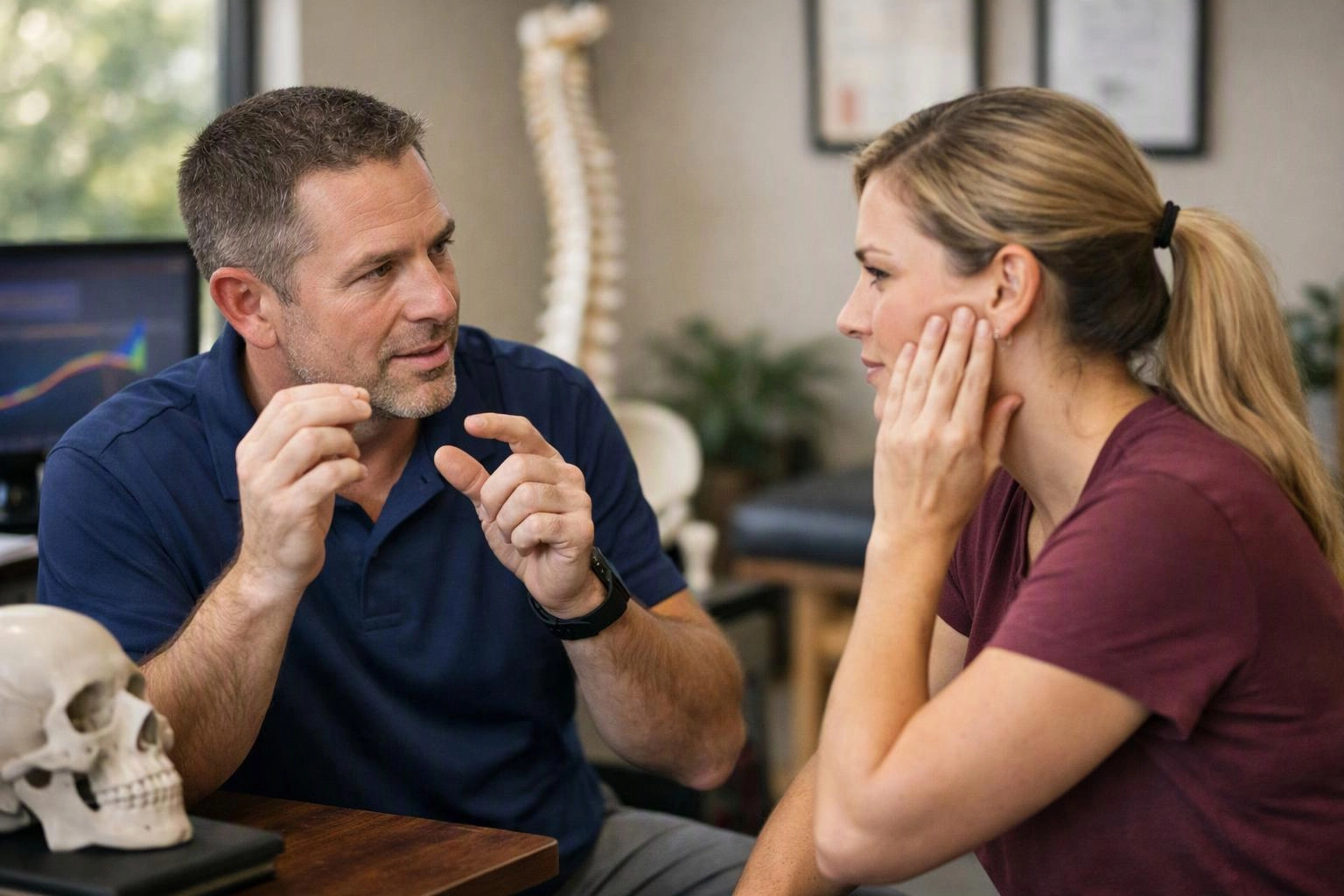
Bruxism happens when the jaw muscles contract and move the teeth together without a useful chewing task. Clenching holds the teeth in contact, while grinding moves them against each other. Sleep-related activity may occur without conscious awareness.
Related glossary terms: Occlusion, Muscle Spasm, Trigger Point.
A clinician looks for signs such as tender jaw muscles, limited jaw movement, tooth wear, or pain near the temples. The exam may also include questions about sleep, stress, headaches, and daily habits. TMJ disorders affect the jaw joints and surrounding tissues, so they can occur with bruxism but describe a different problem.
How Bruxism Relates to TMJ Treatment
TMJ treatment may address muscle tension, jaw movement, and habits that add strain. Care can also consider neck posture because nearby muscles may affect how the jaw feels and moves.
From the Arrowhead Clinic - Lithia Springs team
When we assess bruxism, we ask about clenching, grinding, jaw soreness, headaches, and sleep habits. We also check jaw movement and muscle tenderness. Our team uses those findings to understand how jaw tension may relate to the TMJ concern being evaluated.
Bruxism in Practice: A Real-World Example
A person may wake with tight jaw muscles and temple soreness after clenching during sleep. During TMJ treatment, the care plan may address jaw movement and muscle tension linked to that pattern.
Related Services
Related Terms
Occlusion
Occlusion is the way your upper and lower teeth meet when your mouth closes or moves…
Muscle Spasm
A muscle spasm is a sudden, involuntary tightening of muscle fibers that can cause pain, stiffness…
Trigger Point
A trigger point is a tender, tight area within a muscle that may cause local pain…
Referred Pain
Referred Pain is pain felt in one body area even though its source lies elsewhere. Shared…
Arrowhead Clinic - Lithia Springs
Have Questions About Bruxism?
Contact Arrowhead Clinic - Lithia Springs for practical guidance on Bruxism and related chiropractor work in Lithia Springs.