
What Is An Intervertebral Disc?
An intervertebral disc is a flexible pad between the bones of the spine. Each disc has a tough outer ring and a softer center. These parts help absorb daily forces and allow the spine to bend and move. Disc tissue can also affect nearby nerves when it becomes irritated or changes shape.
Quick Facts About Intervertebral Disc
Category
Spinal structure
Used for
Cushioning and controlled spinal movement
Common confusion
A disc is not a vertebra
Also called
Spinal disc, Disc
Often discussed with
Spinal Decompression Therapy, Herniated Disc Treatment
Key Takeaways About Intervertebral Disc
- Each disc has a firm outer ring and a softer inner center.
- Disc tissue helps spread pressure during movement.
- A disc is not the same as a spinal bone or nerve.
How Intervertebral Disc Works
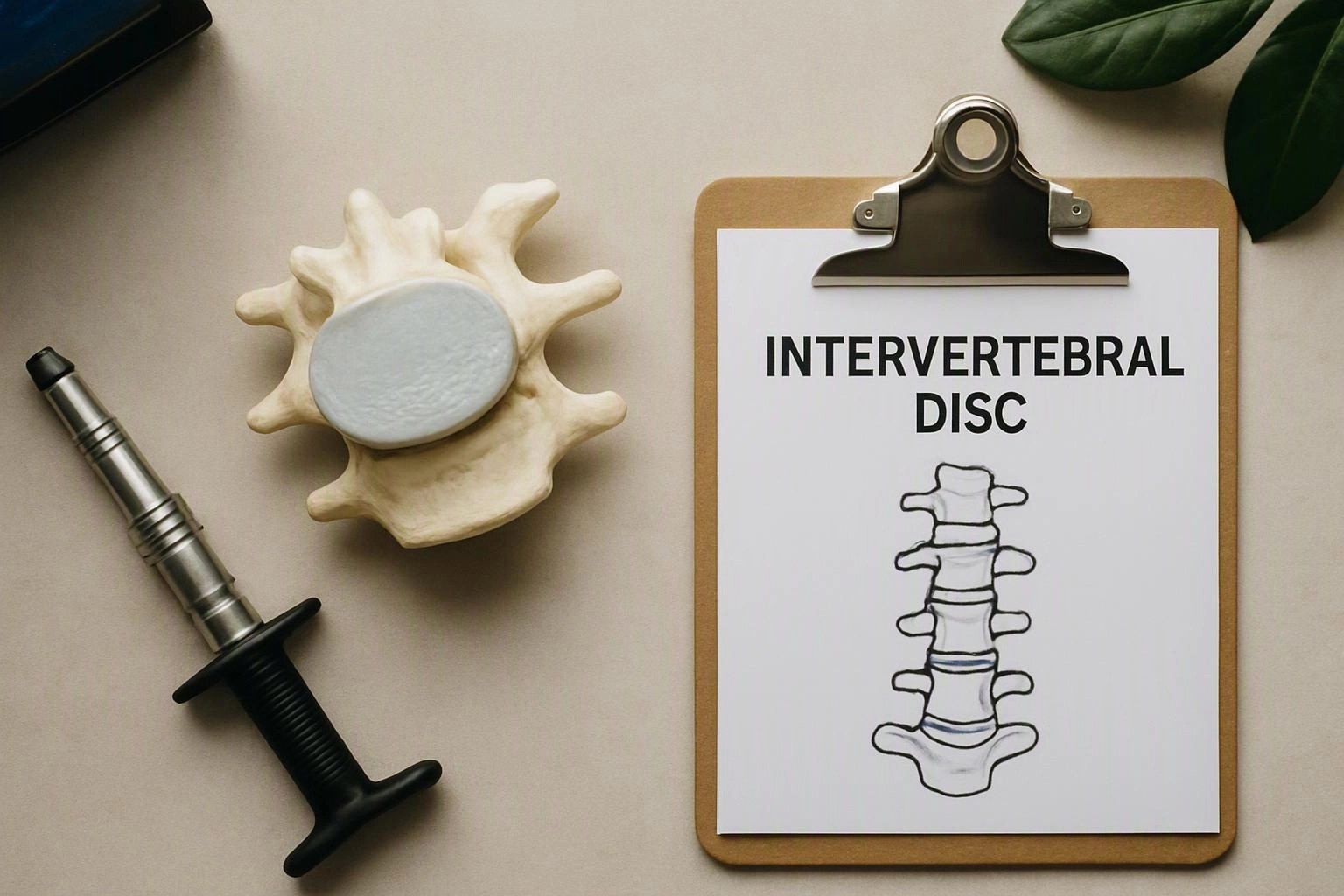
Intervertebral disc tissue sits between neighboring vertebrae. The outer ring contains strong fibers, while the inner center has a softer, gel-like texture. Together, these parts spread pressure as you sit, walk, bend, or lift.
Related glossary terms: Disc Bulge, Annular Tear, Lumbar Spine.
Disc health is considered through symptoms, movement, and imaging when appropriate. A disc may bulge, tear, or lose some of its normal height. These changes can irritate a nearby nerve root, which may lead to pain, tingling, or weakness along a nerve path.
Spinal decompression therapy uses controlled, gentle changes in spinal loading. The goal is to reduce stress on selected spinal areas while the person remains comfortable. A provider considers the affected region and the person's response during care.

From the Arrowhead Clinic - Lithia Springs team
When we assess an intervertebral disc, we review the person's symptoms, movement, and available clinical findings. We also note whether symptoms travel into an arm or leg, since that pattern can suggest nearby nerve involvement. Our team connects these findings to the goals of spinal decompression therapy.
Intervertebral Disc in Practice: A Real-World Example
A person with lower back discomfort may have symptoms that worsen during sitting or bending. During spinal decompression therapy, the team considers the lumbar discs and adjusts care based on comfort and response.
Related Terms
Disc Bulge
A disc bulge is a change in an intervertebral disc where the outer disc tissue extends…
Annular Tear
An Annular Tear is a small split in the tough outer ring of an intervertebral disc…
Lumbar Spine
The lumbar spine is the lower section of the backbone between the rib area and the…
Nerve Root
A nerve root is a bundle of nerve fibers that leaves the spinal cord through an…
Arrowhead Clinic - Lithia Springs
Have Questions About Intervertebral Disc?
Contact Arrowhead Clinic - Lithia Springs for practical guidance on Intervertebral Disc and related chiropractor work in Lithia Springs.