
What Is Disc Degeneration?
Disc Degeneration is a gradual change in the spinal discs that can reduce their flexibility and ability to cushion nearby vertebrae. The change may occur with aging, repeated strain, or injury. Disc degeneration can appear in the neck or lower back and may occur with or without pain, stiffness, or limited movement.
Quick Facts About Disc Degeneration
Category
Spinal disc condition
Used for
Describing disc changes during assessment
Common confusion
Often confused with disc herniation
Also called
Degenerative Disc Disease, DDD
Often discussed with
Spinal Decompression Therapy
Key Takeaways About Disc Degeneration
- Disc degeneration affects the disc structure, not only surrounding muscles.
- Symptoms and imaging findings do not always match.
- Disc degeneration is not the same as a herniated disc.
How Disc Degeneration Works

Disc Degeneration describes changes in the discs between the spinal bones. A disc has a firm outer ring and a softer center that help the spine absorb load and move. Degenerative changes may affect disc height, flexibility, or the way pressure spreads through the area.
Related glossary terms: Bulging Disc, Disc Protrusion, Annular Tear.
A clinician considers symptoms, movement, medical history, and available imaging when assessing the condition. Imaging may show disc changes even when a person has little discomfort. Spinal decompression therapy applies controlled unloading to the spine as part of a care plan. The goal is to support comfortable movement and reduce mechanical stress during treatment.
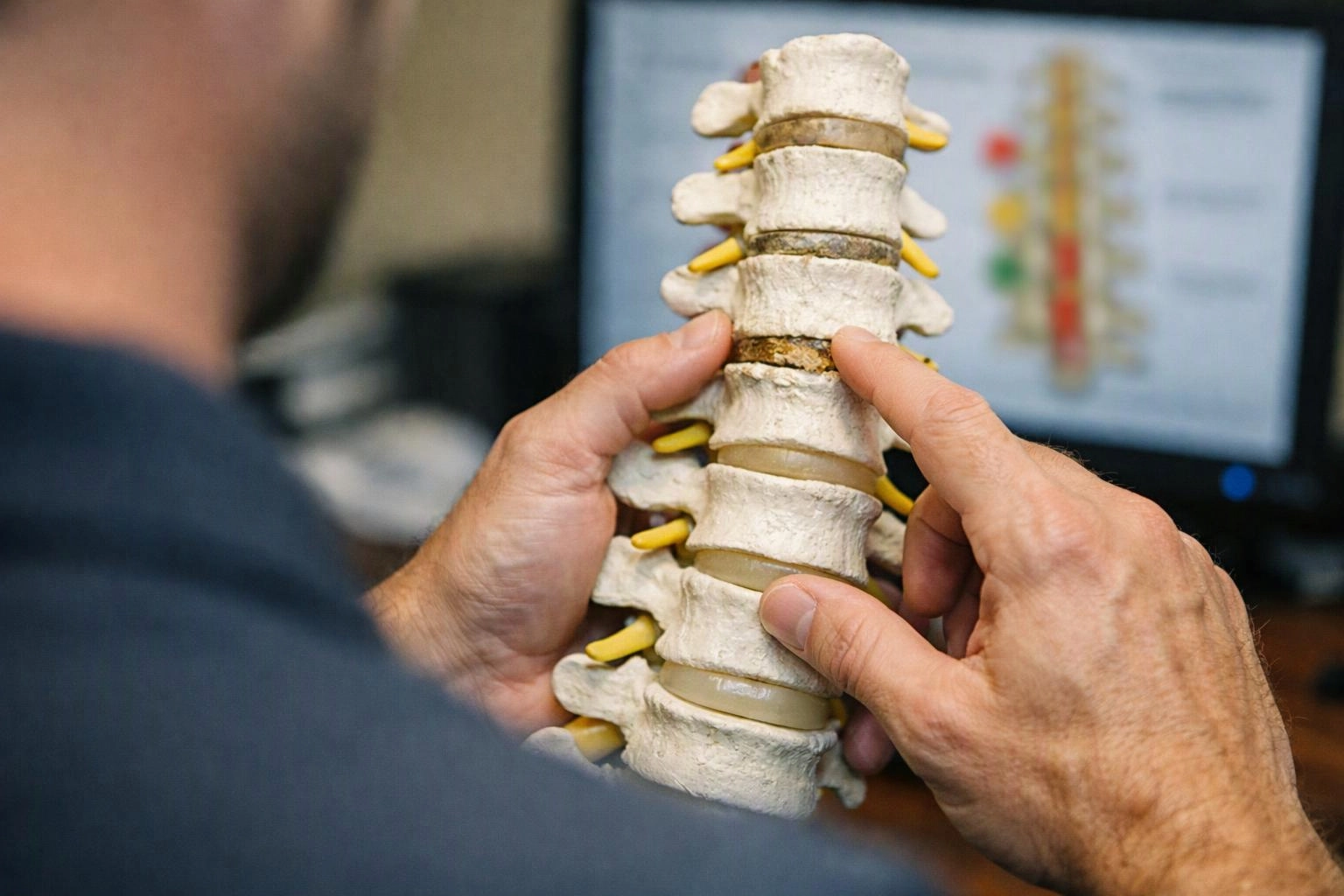
From the Arrowhead Clinic - Lithia Springs team
When we assess disc degeneration, we consider spinal motion, reported symptoms, and relevant examination findings together. Our team uses that context to decide whether Spinal Decompression Therapy fits the person’s goals and overall care plan.
Disc Degeneration in Practice: A Real-World Example
A person with lower back stiffness may show disc changes on imaging and still have symptoms that vary with posture or activity. During Spinal Decompression Therapy, the care plan may focus on controlled spinal unloading and comfortable movement.
Related Services
Related Terms
Bulging Disc
A bulging disc is a spinal disc that extends beyond its usual boundary as the outer…
Disc Protrusion
Disc Protrusion is a condition in which an intervertebral disc extends beyond its usual boundary while…
Annular Tear
An annular tear is a split or crack in the tough outer ring of a spinal…
Lumbar Spine
The lumbar spine is the lower section of the vertebral column, located between the thoracic spine…
Arrowhead Clinic - Lithia Springs
Have Questions About Disc Degeneration?
Contact Arrowhead Clinic - Lithia Springs for practical guidance on Disc Degeneration and related chiropractor work in Lithia Springs.