
Skip to content

Therapeutic Exercise in Vinings, Georgia

Exercise progression changes when a movement needs replacement instead of adjustment, and we assess that difference in Vinings.

Licensed & InsuredSame-Day ServiceUpfront, Transparent PricingServing 35 Communities

Quick Summary: Therapeutic Exercise in Vinings, Georgia

Therapeutic Exercise in Vinings is provided by Arrowhead Clinic - Lithia Springs for people seeking guided movement, activity support, and a home program. The clinic provides chiropractic care in Lithia Springs for individuals and families, with personalized care plans and explanations before treatment.

  • What we do: Arrowhead Clinic - Lithia Springs provides Therapeutic Exercise for people in Vinings, Georgia through movement assessment, guided activity, and home program planning.
  • What is included: Key capabilities include movement assessment, exercise progression, activity goal planning, and clear treatment explanations before care.
  • What you get: The patient leaves with a clearer exercise plan that fits current movement needs and activity goals.

Why does my exercise plan need to change when pain keeps returning?

A recurring symptom can show that a movement, load, or daily habit needs review. Therapeutic Exercise checks how the body moves and connects that finding to your activity goals. A clinician can then decide whether to adjust the movement, replace it, or add a home program.

Therapeutic Exercise in Vinings for Guided Movement Planning

Therapeutic Exercise focuses on how a person moves during daily tasks, work, exercise, or recovery. The service may suit people with back pain, neck pain, sciatica, shoulder pain, hip pain, or reduced confidence with movement.

The main buyer decision is fit. A movement assessment helps show whether guided exercise belongs in the care plan, whether an adjustment is also discussed, or whether another type of medical evaluation is needed. Results vary, and individual response differs.

The plan is not a promise of a specific outcome. It gives you a way to understand the selected movements, practice them safely, and discuss changes at follow-up visits. A home program can support regular maintenance when it matches your needs.

  • Describe the movement that causes trouble and the activity you want to resume.
  • Bring relevant health history and any records you want the clinic to review.
  • Ask how each movement fits your activity goals and home routine.
  • Confirm what to do if a movement increases symptoms.
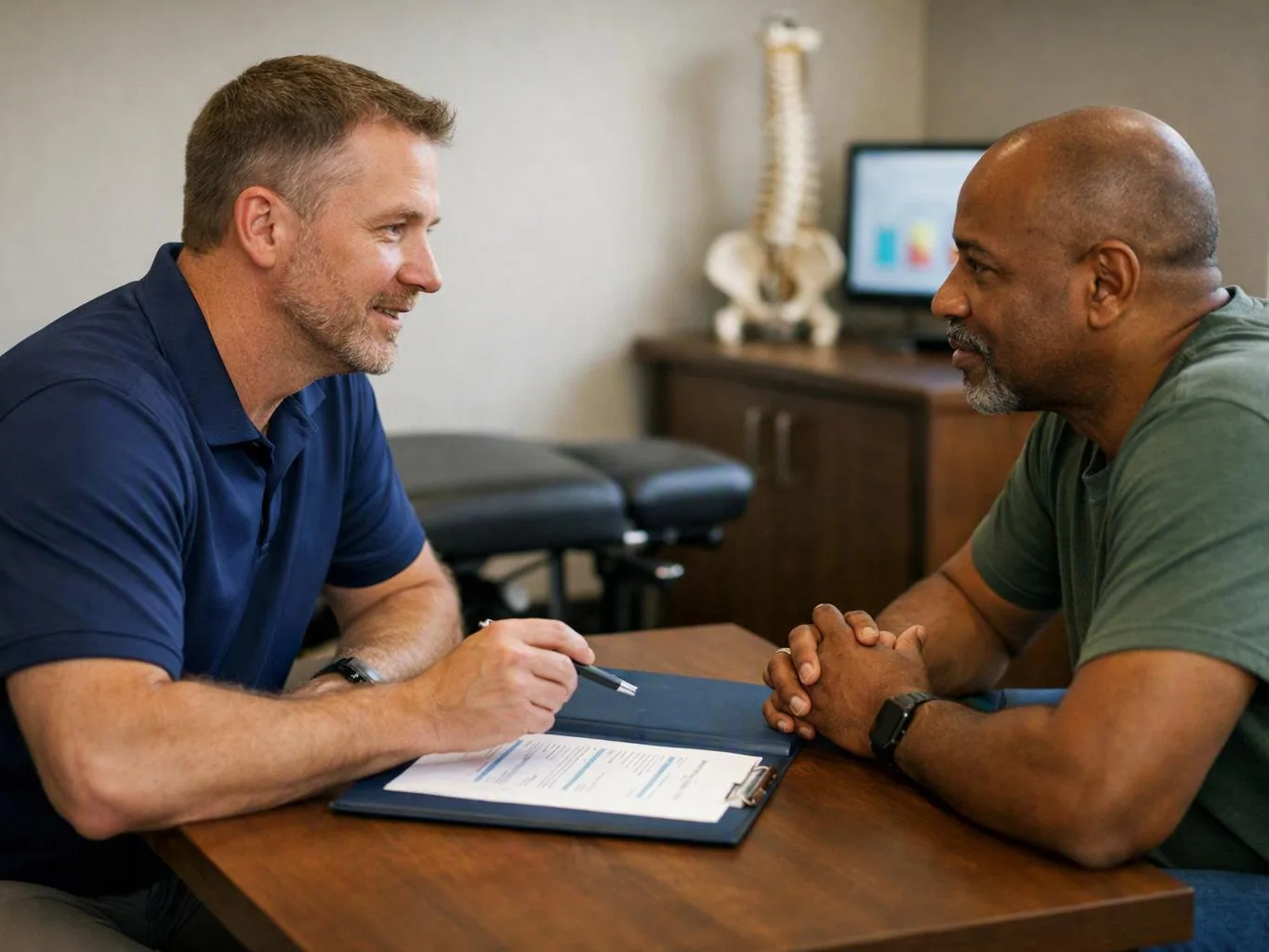
Two men sit across a table in a clinic, talking over paperwork on a blue clipboard

Service Overview

Therapeutic Exercise is a guided movement service that supports strength, control, mobility, and daily activity.

  • It differs from a chiropractic adjustment because the patient learns and performs selected movements between visits.
  • Arrowhead Clinic - Lithia Springs provides this care for people in Vinings and the surrounding service area.

How We Approach Movement-Based Care

Start with movement findings

Movement assessment comes before exercise selection. We look at control and comfort during relevant tasks, then explain what the findings mean. This service is the wrong fit when a serious or unexplained symptom needs a different medical evaluation first.

Link exercises to activity goals

The plan connects selected movements with a real goal, such as easier walking, lifting, sitting, or returning to an activity. That link helps you understand why each movement belongs in the plan.

Explain the home program

Home exercises need clear instructions and a reason for each step. We discuss how to practice the plan and what symptoms should prompt a follow-up question.

Process

How Guided Exercise Planning Works

1

Review Your Health History

The new patient intake covers your health history, symptoms, current activities, and the reason you want care.

2

Assess Relevant Movement

The movement assessment looks at control, range of motion, and symptom response during tasks tied to your activity goals.

3

Set Activity Goals

Your activity goals help shape the plan. We discuss the movement you want to improve and the limits that affect daily life.

4

Choose And Explain Movements

Selected exercises are explained before practice. We discuss whether a movement needs adjustment, replacement, or a different level of challenge.

5

Build The Home Program

The home program gives you practical movements to review between appointments. We also explain what to do if symptoms change.

6

Review Progress

A follow-up discussion checks how the plan fits your activities and whether the next step should change.

What Guided Exercise Care Includes

Here's what you get:

  • A movement assessment reviews control, range of motion, and the activity that brings on symptoms.
  • Activity goals shape the choice of movements and the order in which they are introduced.
  • The clinician explains each movement before you practice it.
  • A home program gives you exercises to discuss and practice between visits.
  • Progress can be reviewed as your movement needs or daily activities change.

What Patients Gain From Guided Movement Work

A movement assessment connects symptoms with the tasks that matter in daily life.

Exercise selection becomes easier to understand because each movement has a stated purpose.

A home program gives you a practical way to continue selected care between appointments.

Activity goals keep the plan focused on function, not only on a body part.

Regular maintenance may help you stay aware of movement habits that affect comfort.

Choosing The Right Movement Support

This comparison shows how common care options differ by their main purpose.

Care optionMain focusWhat the patient does
Therapeutic exerciseGuided movement linked to activity goalsPractices selected movements and discusses a home program
Chiropractic adjustmentChiropractic care focused on joint and spinal movementReceives care based on the clinic's assessment and plan
Medical evaluationSymptoms that need medical review beyond this serviceFollows the evaluation and care direction provided

The Arrowhead Clinic - Lithia Springs Standard

  • Tailored Adjustments
  • Spinal Decompression
  • Integrated Therapies
  • Pain And Injury Care

Questions About Guided Exercise Care

How is an exercise progression plan created?

Exercise progression starts with a movement assessment and your activity goals. The plan may adjust or replace a movement when symptoms or task demands call for a change. A home program supports practice between appointments.

What should be checked before therapeutic exercise is scheduled?

A health history and movement assessment should be checked before therapeutic exercise is scheduled. The review covers symptoms, current activity, movement control, and relevant medical information. These details help determine whether guided exercise fits your needs or whether another evaluation should come first.

Who is a good fit for therapeutic exercise, and who needs a different service?

People seeking guided movement for activity limits, back pain, neck pain, or similar concerns may be good fits. A different service or medical evaluation may be needed when symptoms are unexplained, severe, or outside the purpose of guided exercise. The assessment helps clarify that decision before the plan begins.

What happens at each stage of the first visit?

The first visit covers intake, health history, movement assessment, activity goals, and treatment planning. The process may include discussion of chiropractic care, home exercises, and follow-up needs. Clear explanations help you understand what each selected movement is meant to support.

Which symptoms should stop an exercise until the clinic reviews it?

A sharp new symptom, marked weakness, or a clear loss of function should stop an exercise until the clinic reviews it. Tell the clinic what movement caused the change and what you felt. Seek urgent medical care for symptoms that feel severe or life-threatening.

Why does an activity goal matter during movement planning?

An activity goal shows how movement affects the task you want to perform. Walking, lifting, sitting, and exercise place different demands on the body. The goal helps the clinician choose relevant movements and explain how a home program connects with daily life.

What changes the cost of an exercise consultation?

The consultation, assessment needs, treatment plan, and services discussed can change the cost. Ask the clinic for current pricing and insurance information before treatment begins.
Contact

Ask About Therapeutic Exercise In Vinings

The clinic can provide current details about appointments, insurance, and care before you book.

A hand grips a red exercise strap on a green mat beside a folded towel

Therapeutic Exercise in Other Areas

The health and wellness information on this website is for general informational purposes only and is not medical advice. It does not create a provider-patient relationship. Individual results vary.

(770) 501-7716