
What Is the Vestibular System?
The vestibular system is a group of inner-ear organs and nerve pathways that sense head movement, position, and balance. It works with vision, muscles, and joints to help your brain guide posture and eye movement. Changes in this system can affect steadiness, motion awareness, and symptoms linked with vertigo.
Quick Facts About Vestibular System
Category
Balance and motion system
Used for
Tracking head movement and position
Common confusion
Not every dizziness problem begins in the inner ear
Also called
Balance system, Vestibular apparatus
Often discussed with
Vertigo Treatment
Key Takeaways About Vestibular System
- Inner-ear organs detect head movement and position.
- Balance depends on input from several body systems.
- Vertigo does not always come from the vestibular system.
How Vestibular System Works
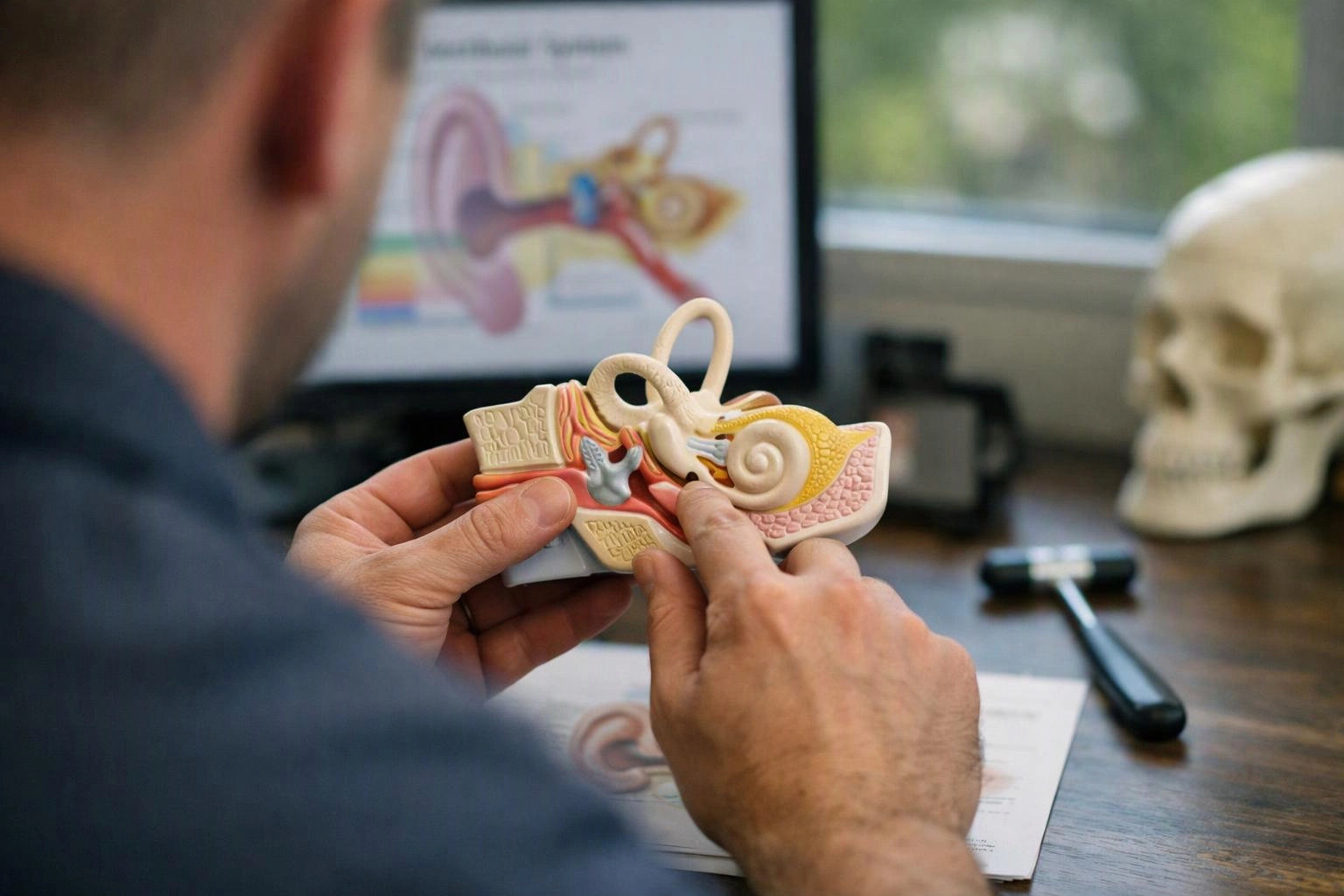
The vestibular system uses inner-ear sensors to detect head motion and changes in position. Nerve signals carry that information to the brain. The brain then compares those signals with input from the eyes, muscles, and joints.
Related glossary terms: Benign Paroxysmal Positional Vertigo, Gait Analysis, Cervical Spine.
Vestibular organs respond to different types of movement. Some detect turning or tilting, while others detect shifts in a straight line. The brain uses these signals to steady your gaze and adjust posture during movement.
During a vertigo evaluation, clinicians may observe balance, eye movement, head motion, and body control. These observations can help show whether symptoms fit a vestibular pattern. They can also point to other factors that need attention.
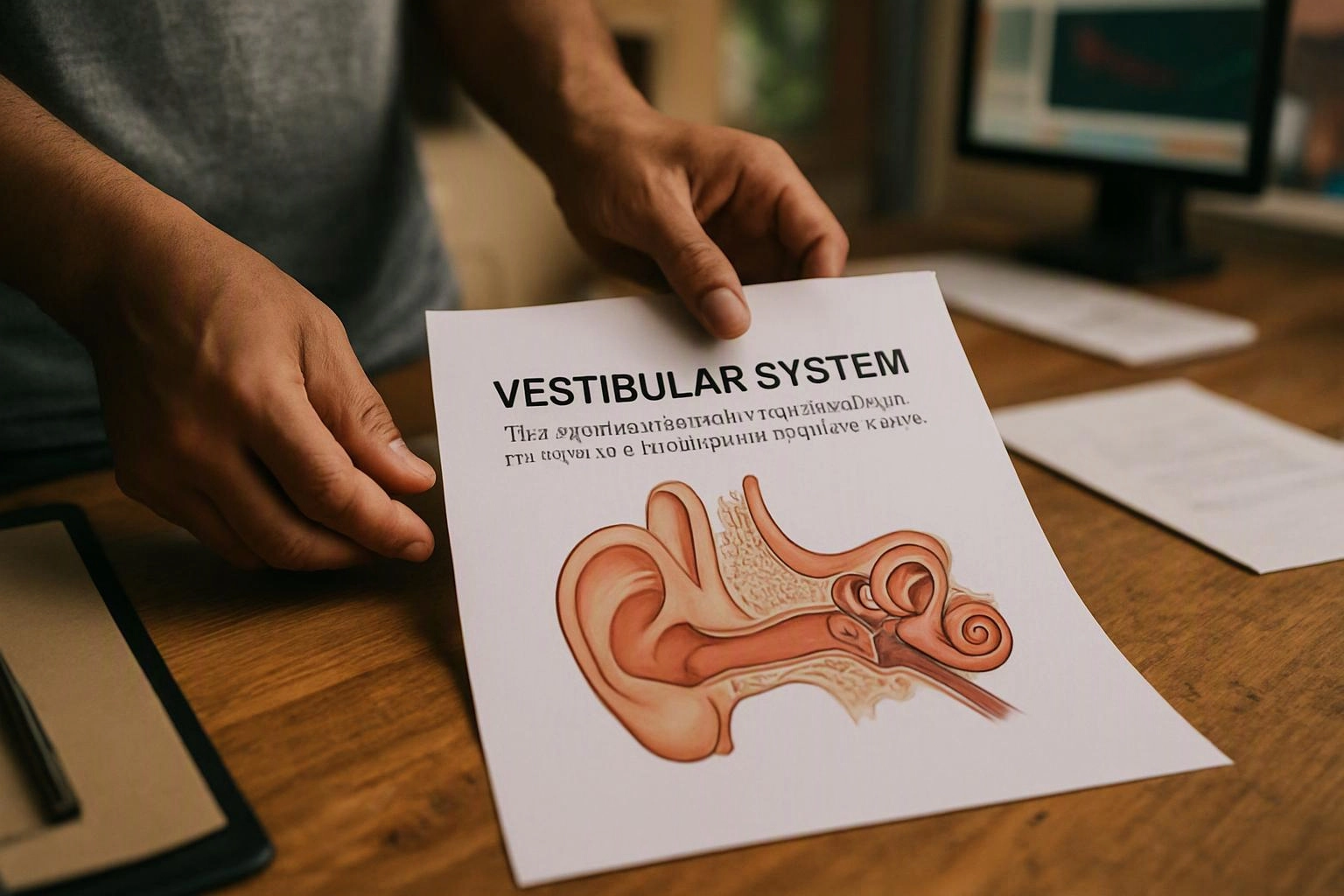
From the Arrowhead Clinic - Lithia Springs team
When we assess vestibular concerns, we ask about the movement or position that brings on symptoms. We also observe balance, eye movement, and neck motion during the visit. Our team uses those findings to guide care for Vertigo Treatment and to recognize when another type of evaluation may be needed.
Vestibular System in Practice: A Real-World Example
A person may feel the room spin when turning the head or changing position. During Vertigo Treatment, the care team may observe balance and eye responses while reviewing those symptoms.
Related Services
Related Terms
Benign Paroxysmal Positional Vertigo
Benign Paroxysmal Positional Vertigo is a common inner-ear condition that causes brief spinning sensations when you…
Gait Analysis
Gait Analysis is the study of how you walk or run. It examines movement in the…
Cervical Spine
Cervical Spine is the upper section of the spinal column that supports the head and protects…
Joint Mobility
Joint Mobility is the amount and quality of movement available at a joint. It describes how…
Arrowhead Clinic - Lithia Springs
Have Questions About Vestibular System?
Contact Arrowhead Clinic - Lithia Springs for practical guidance on Vestibular System and related chiropractor work in Lithia Springs.