Skip to content

Therapeutic Exercise in Atlanta, Georgia

Movement patterns guide therapeutic exercise care in Atlanta. We use them to shape a plan for chronic back pain, weakness, and daily movement.

Licensed & InsuredSame-Day ServiceUpfront, Transparent PricingServing 35 Communities

Quick Summary: therapeutic exercise in Atlanta, Georgia.

The practice serves individuals and families in the Atlanta area and offers Free Consultations.

  • What we do: Arrowhead Clinic - Lithia Springs provides therapeutic exercise for Atlanta clients who need guided movement support for chronic back pain and related strength concerns.
  • What is included: Care may include movement assessment, guided exercises, progress checks, and a personalized treatment plan.
  • What you get: The customer leaves with a clearer movement plan that fits current strength, pain tolerance, and daily goals.

Can therapeutic exercise improve chronic back pain?

Yes, therapeutic exercise may improve chronic back pain when the plan matches the person’s movement limits and goals. Results vary, so we check muscle weakness, pain tolerance, and functional strength before choosing exercises. We also explain how regular practice supports everyday movement. Severe or changing symptoms may need medical review before exercise begins.

Therapeutic exercise for chronic back pain in Atlanta

This service focuses on the buyer who wants more than short-term symptom advice. The main decision is whether guided movement fits the person’s current pain, strength, and daily tasks.

We assess how the body moves during simple actions, then connect those findings to a personalized treatment plan. Muscle weakness, limited pain tolerance, and poor functional strength can change the plan. Individual response differs, and exercise does not guarantee a specific result.

The service works alongside chiropractic care when that combination fits the assessment. A customer should ask how progress will be checked, which movements matter, and what signs call for a different level of care.

  • Ask which movement limits the plan addresses.
  • Discuss pain tolerance before guided exercise begins.
  • Confirm how progress re-examination will shape later care.
  • Share health history and current symptoms during the new patient intake.
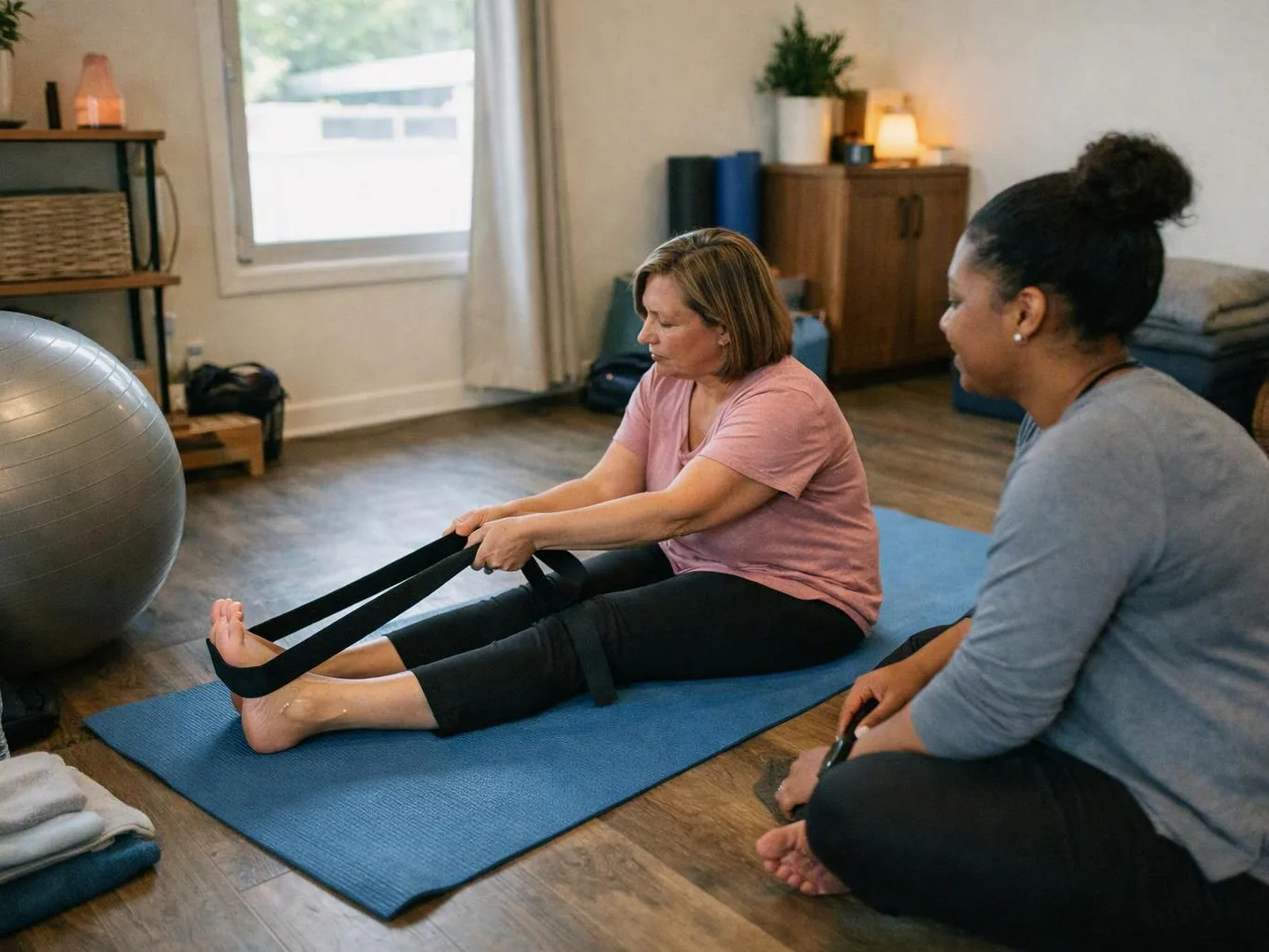
Two women sit on mats in a living room, one stretching with a strap while the other watches

Service Overview

Therapeutic exercise is guided movement that builds control, strength, and function around a person’s needs.

  • It differs from a chiropractic adjustment because exercise trains active movement, while an adjustment uses a hands-on technique.
  • Our team provides this care for people in Atlanta and the surrounding area.

What guided movement care includes

Here's what you get:

  • We review health history, symptoms, and daily movement goals.
  • We assess movement patterns and note areas of muscle weakness.
  • We explain a personalized treatment plan before care begins.
  • We guide exercises that support functional strength and controlled movement.
  • We discuss how regular maintenance may support everyday movement.
  • We review progress and adjust the plan when the assessment calls for it.

What therapeutic exercise can change

Guided practice may help you build better control during daily movement.

A plan based on muscle weakness gives you a clearer focus for exercise.

Functional strength work may support tasks such as walking, lifting, or changing position.

Learning how to pace movement can help you work within your current pain tolerance.

Regular maintenance may help you stay engaged with movement goals after the first phase of care.

How we approach guided movement care

Assessment before exercise

The first decision is fit. We review symptoms, movement, and daily goals before choosing exercises. This service is the wrong job when a changing or severe symptom needs medical assessment first.

Clear explanations before care

You’ll hear what each exercise is meant to support and how it relates to your plan. Questions about technique are welcome before practice begins.

Care that can be checked

We use progress re-examination to review movement and function. Your response helps shape the next step instead of locking you into one unchanged routine.

Process

Steps in a guided exercise visit

1

Review symptoms and goals

We begin with a new patient intake and health history. You describe pain, movement limits, daily tasks, and what you want to improve.

2

Check movement and strength

We observe movement and assess areas linked to muscle weakness, pain tolerance, and functional strength.

3

Explain the treatment plan

We connect the assessment to a personalized treatment plan and explain each part before care begins.

4

Practice controlled movement

We guide exercises at a level that matches the assessment. Technique matters, so we correct form and answer questions during practice.

5

Review progress

A progress re-examination helps us review movement and decide whether the plan needs a change or continued practice.

Movement care choices

These options differ by how the customer takes part and what the visit focuses.

Care optionMain focusCustomer role
Therapeutic exerciseActive movement, strength, and functionThe customer practices guided movement
Chiropractic adjustmentHands-on spinal or joint careThe customer receives the adjustment
Soft tissue therapyMuscle and soft tissue workThe customer communicates comfort during care

The Arrowhead Clinic - Lithia Springs Standard

  • Tailored Adjustments
  • Spinal Decompression
  • Integrated Therapies
  • Pain And Injury Care

Questions about guided exercise care

How does a visit move from the first call to the last step?

A visit moves from intake and assessment to treatment planning, guided practice, and progress review. The first discussion covers health history, symptoms, and goals. We then check movement and explain the plan. Later review helps us decide whether the exercises still fit your function and response.

What should I bring to a first exercise appointment?

Your health history, symptom details, and questions are useful at the first appointment. Bring information about movements that worsen symptoms and tasks that feel limited. We use those details with the intake and exam. You can also ask about insurance verification and accepted coverage before care begins.

Which part of the body decides the exercise scope?

The assessment decides the scope, not one body part alone. We review movement, muscle weakness, pain tolerance, and functional strength together. Back, hip, and leg function may all affect daily movement. The plan stays within the findings and changes when progress review shows a different need.

How can I tell whether guided exercise fits my back pain?

Guided exercise fits when active movement can be assessed safely and linked to a clear daily goal. We discuss symptoms, movement limits, and warning signs before practice. Chronic pain does not guarantee that exercise is suitable. A Free Consultation lets you ask about fit before choosing care.

Why might exercise be paired with chiropractic care?

Exercise may be paired with chiropractic care when active movement supports the broader treatment plan. An adjustment and therapeutic exercise use different methods. We explain which service addresses the current finding and how the parts relate. Individual response differs, so care is reviewed instead of assumed to work the same way for everyone.
Contact

Ask about therapeutic exercise in Atlanta

We’ll discuss your goals, current symptoms, and whether guided exercise fits your care.

A hand grips a red exercise strap on a green mat beside a folded towel

ZIP Codes We Serve in Atlanta, Georgia

73 ZIP codes — show all
30301303023030330304303053030630307303083030930310303113031230313303143031530316303173031830320303213032430325303263032730328303313033230334303363033730338303393034230343303443034830349303533035430355303573035830361303633036430368303693037030371303743037530377303783038030384303853038830392303943039630398311063110731126311313113631139311503115631192311933119531196

Therapeutic Exercise in Other Areas

The health and wellness information on this website is for general informational purposes only and is not medical advice. It does not create a provider-patient relationship. Individual results vary.

(770) 501-7716