Skip to content

Headache Treatment in College Park, Georgia

Trigger point work supports headache care for people in College Park. We pair hands-on care with posture and relaxation guidance when appropriate.

Licensed & InsuredSame-Day ServiceUpfront, Transparent PricingServing 35 Communities

Quick Summary: headache care in College Park, Georgia

The service may include trigger point work, manual therapy, relaxation exercises, and posture guidance after a health history and exam.

  • What we do: Arrowhead Clinic - Lithia Springs provides Headache Treatment and chiropractic care for people in College Park, Georgia.
  • What is included: Trigger point work, manual therapy, posture correction, relaxation exercises, and personalized care planning.
  • What you get: Headache care gives you a clear treatment plan matched to your symptoms, movement, and daily habits.

Why do my headaches keep coming back after treatment?

Recurring headaches may relate to neck tension, posture, muscle strain, or other factors. A health history and exam help connect symptoms with movement and daily habits. Trigger point work, manual therapy, relaxation exercises, or posture guidance may support care when they fit your findings. Seek medical evaluation for sudden or severe symptoms.

Headache Treatment for College Park headache concerns

Headache care focuses on people who notice recurring head pain, neck tension, or symptoms linked with posture and movement. The first decision is whether hands-on chiropractic care fits the concern and whether another form of medical care is needed.

A visit may include a new patient intake, health history, exam, and report of findings. We then discuss a personalized treatment plan. Trigger point work can address tender muscle areas, while manual therapy and posture correction focus on movement patterns that may add strain.

Results vary, and individual response differs. This service is not the right fit for every headache, especially when symptoms are sudden, severe, or linked with other warning signs. Seek medical care when urgent symptoms appear.

  • Describe when headaches began and how often they return.
  • Note neck pain, jaw tension, light sensitivity, or movement limits.
  • Bring relevant health information and a list of current concerns.
  • Ask which treatment methods fit the exam findings.
  • Confirm appointment, insurance, and coverage details before care.
Folded beige towels stacked on a soft surface in warm light

Service Overview

Headache Treatment is a chiropractic service that addresses physical factors linked with headache symptoms.

  • It differs from general wellness care because the visit focuses on your headache pattern, related tension, and movement findings.
  • College Park residents can ask Arrowhead Clinic - Lithia Springs about available headache care and appointment details.

What headache care includes for your visit

Here's what you get:

  • A new patient intake records your headache concerns and relevant health history.
  • A health history and exam help assess movement, posture, and related tension.
  • A report of findings explains what the examination showed.
  • Trigger point work may address tender muscle areas linked with tension.
  • Manual therapy may support movement in the neck and nearby tissues.
  • A personalized treatment plan explains suitable next steps before care begins.
Process

How we plan and provide headache care

1

Share your headache history

The new patient intake covers symptom patterns, neck concerns, daily habits, and relevant health history.

2

Complete the health history and exam

We examine movement, posture, and tender areas that may relate to your concerns.

3

Review the report of findings

The report of findings explains what we observed and which care options may fit.

4

Choose the treatment approach

We discuss manual therapy, trigger point work, relaxation exercises, or posture guidance when appropriate.

5

Set follow-up goals

Your personalized treatment plan outlines next steps and supports practical movement goals.

What to check before choosing headache care

Clear findings before treatment

Your health history and exam shape the care discussion. We explain the findings before treatment, so you can ask informed questions.

Care matched to movement

Posture, neck motion, and tender muscle areas may guide the plan. Manual therapy and relaxation exercises are considered only when they fit the assessment.

Know when care is not the right fit

Chiropractic headache care is not the right job for every symptom. Sudden, severe, or unusual headaches need medical evaluation before hands-on treatment.

What headache care can change for daily movement

Posture guidance may help you notice habits that add strain during work or rest.

Manual therapy supports movement when neck or upper-body tension affects comfort.

Relaxation exercises give you practical ways to manage muscle tension between visits.

A clear plan helps you understand which care options fit your symptoms.

Regular maintenance may support ongoing movement goals when it is appropriate for you.

Headache care methods and their focus

These methods address different parts of a headache care plan and may be combined when the assessment supports them.

MethodPrimary focusHow it may fit
Trigger point workTender muscle areasMay support tension-related symptoms
Manual therapyMovement in nearby tissuesMay support mobility and comfort
Relaxation exercisesMuscle release and breathingSupports self-care between visits
Posture correctionDaily sitting and standing habitsMay reduce added strain

The Arrowhead Clinic - Lithia Springs Standard

  • Tailored Adjustments
  • Spinal Decompression
  • Integrated Therapies
  • Pain And Injury Care

Questions about headache care and chiropractic visits

What therapies may support headache relief?

Trigger point work may support headache relief when tender muscle areas contribute to tension. Manual therapy can address related movement limits, while relaxation exercises and posture correction support daily habits. A health history and exam guide the plan. Results vary, so we explain suitable options before treatment.

How does a headache visit move from the first call to the last step?

The visit moves from scheduling and intake to an exam, findings review, treatment planning, and follow-up discussion. The new patient intake records your concerns. The exam checks movement and related tension. We explain the plan before care, then discuss practical next steps.

Which part of the visit decides the treatment scope?

The health history and exam decide the treatment scope for headache care. Symptoms, neck movement, posture, tender areas, and relevant health details guide the discussion. The report of findings explains which methods may fit. We do not use one plan for every person.

Which method may support headaches linked with neck tension?

Manual therapy may support headaches linked with neck tension when the exam finds related movement limits. Trigger point work may address tender muscles, and posture guidance may address daily strain. The selected method depends on your findings and stated care goals.

When should I ask about insurance before booking?

Insurance questions should be raised before booking so the clinic can discuss current benefits and accepted coverage. Bring your insurance information and ask which services require confirmation. Coverage rules differ by plan, and the clinic can provide location-specific details.

Why might relaxation exercises be part of a headache plan?

Relaxation exercises may help reduce muscle tension during daily activities and between visits. The exercises are discussed alongside examination findings, posture, and manual care. They do not replace medical evaluation for sudden or unusual headache symptoms.
Contact

Discuss headache care in College Park

Request a Free Consultation to discuss headache symptoms, appointment details, and available coverage.

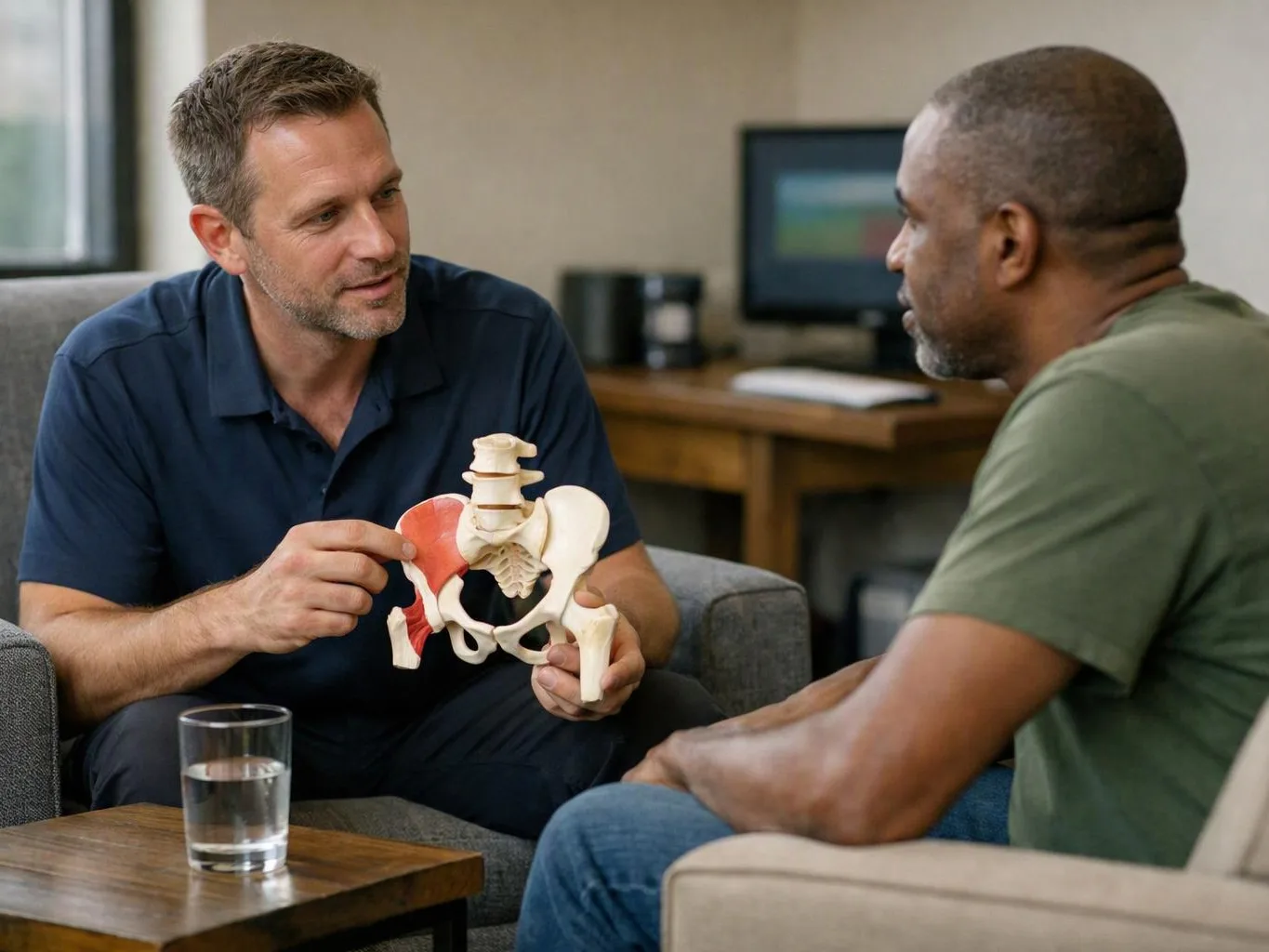
A man shows a pelvis model while talking with another man in a living room clinic setting

The health and wellness information on this website is for general informational purposes only and is not medical advice. It does not create a provider-patient relationship. Individual results vary.

(770) 501-7716