Skip to content

Corrective Exercise Therapy in Druid Hills, Georgia

Limited mobility can slow recovery in Druid Hills. Our chiropractic team builds guided exercises around your exam findings and recovery goals.

5 · 1,079 ReviewsFree ConsultationsUpfront, Transparent PricingAll Major Brands

Quick Summary: corrective exercise therapy in Druid Hills, Georgia

Care combines therapeutic exercise with chiropractic treatment and customized plans based on health history, exam findings, and recovery goals.

  • What we do: Arrowhead Clinic - Lithia Springs provides Corrective Exercise Therapy for patients in Druid Hills, Georgia, using therapeutic exercise within customized chiropractic care plans.
  • What is included: Therapeutic exercise, mobility-focused care, chiropractic adjustments, soft tissue therapy, massage therapy, and diagnostic services.
  • What you get: Patients receive a guided exercise plan that supports safer movement and practical recovery goals.

What can limit progress with corrective exercise therapy?

Limited mobility, poor consistency, incorrect technique, and overtraining can all slow progress. Guided exercises work best when the plan matches your current movement, symptoms, and recovery goals. We check how you perform each movement and adjust the plan when needed. New or worsening symptoms deserve a fresh examination before you continue the same routine.

Our Track Record

Average Rating
5
Customer Reviews
1079

Corrective Exercise Therapy in Druid Hills for limited mobility

Corrective exercise therapy gives patients a structured way to work on movement after an injury or during ongoing pain. It fits people with back pain, neck pain, whiplash, sciatica, joint pain, or mobility concerns who need more than a single hands-on visit.

The main decision is whether guided exercise belongs in your care plan. Our team considers your health history, examination findings, symptoms, and recovery goals before recommending movements. Diagnostic services, including 3D X-ray technology, may also support the wider chiropractic assessment when clinically appropriate.

Progress depends on fit and follow-through. Poor consistency can reduce the value of a plan, while incorrect technique or overtraining may irritate symptoms. We focus on clear treatment recommendations and explanations, so you understand what each movement is meant to support.

  • Share your health history, injury details, and current movement concerns.
  • Ask how each exercise supports your recovery goals.
  • Tell us when a movement causes new or worsening symptoms.
  • Follow the recommended technique and discuss changes before adding more exercise.
A man gestures while talking to a seated woman on a yoga mat with exercise props in a bright room

Service Overview

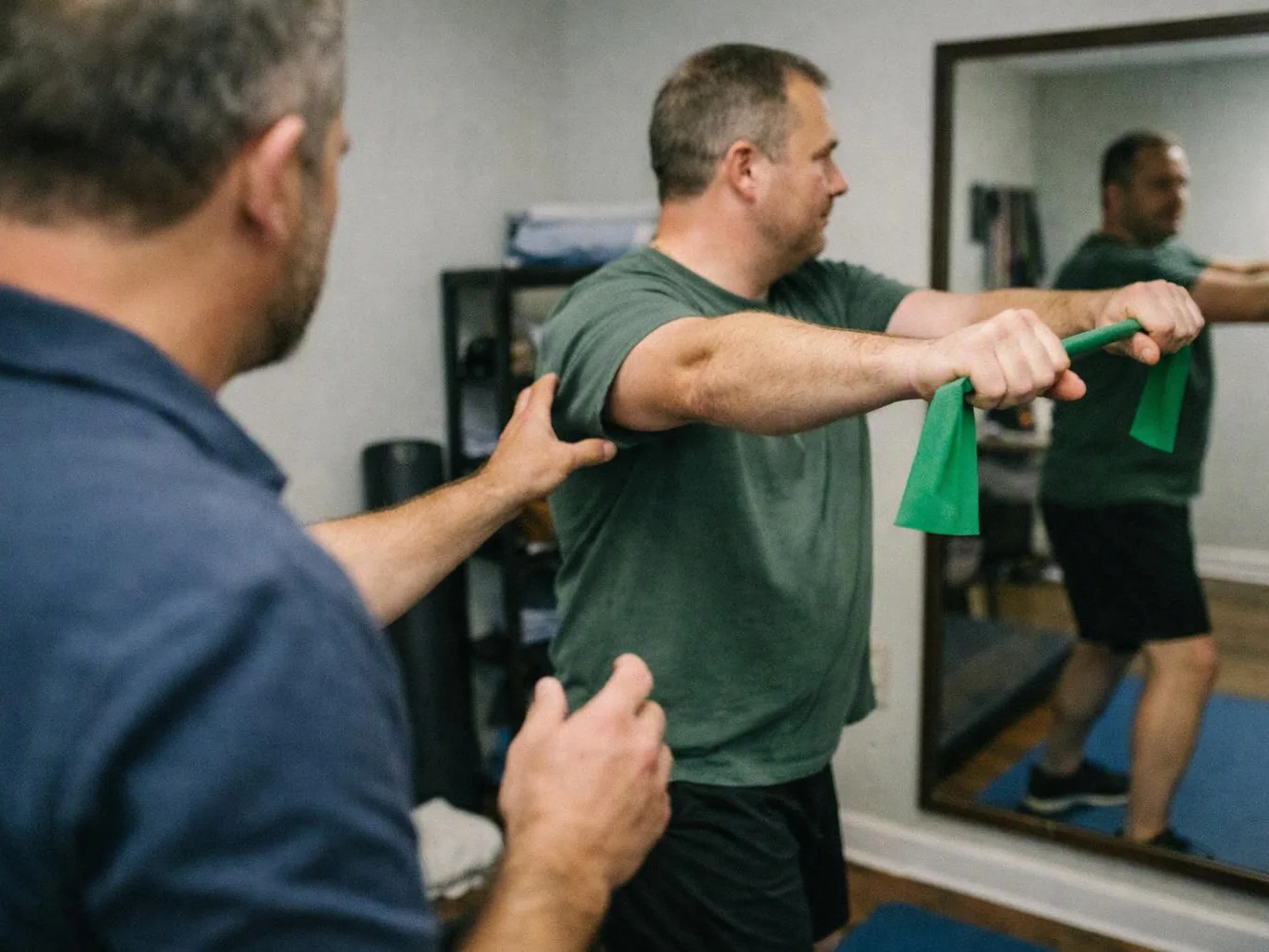
Corrective Exercise Therapy is a guided care service that uses targeted movement to support mobility, strength, and safer daily activity.

  • It differs from a chiropractic adjustment because exercises help you practice controlled movement, while an adjustment addresses joint motion through hands-on care.
  • Arrowhead Clinic - Lithia Springs provides this service for patients in Druid Hills through its chiropractic and injury care programs.
Process

How we deliver guided exercise care

1

Review your health history

We discuss your injury, symptoms, past care, daily limits, and recovery goals during the new patient intake.

2

Complete the examination

We assess movement, joint function, and related concerns, with X-rays considered when clinically indicated.

3

Explain the findings

We provide a report of findings and explain which movement concerns the recommended care plan addresses.

4

Practice the selected movements

We teach therapeutic exercises and check your technique so the movements match your current ability.

5

Review your progress

We discuss symptom changes and movement concerns during follow-up care, then adjust recommendations when needed.

Why patients choose guided movement care

A plan tied to your examination

Your health history and exam findings shape the exercise choices. The wrong plan can aggravate symptoms, so this service is not the right first step for every concern.

Clear movement instruction

We explain how to perform each exercise and what the movement is meant to address. That gives you a practical reference between visits.

Care for injury and pain concerns

Our team works with people recovering from auto accidents, workplace injuries, sports injuries, and slip-and-fall injuries, along with patients managing ongoing pain.

What corrective exercise therapy includes for your care plan

Here's what you get:

  • A review of your medical history, examination findings, and movement concerns.
  • Therapeutic exercises selected around your current mobility and recovery goals.
  • Clear explanations of exercise technique and the purpose of each movement.
  • Chiropractic adjustments when they fit the wider treatment plan.
  • Related care such as soft tissue therapy or massage therapy when appropriate.
  • Progress discussions that help determine whether your plan needs adjustment.

What corrective exercise therapy changes for daily movement

Guided movement may help you work toward better control during daily activities.

A personalized care plan connects exercise choices to your symptoms and recovery goals.

Clear technique guidance helps you recognize when a movement needs correction.

Regular maintenance may support movement habits after the main injury concern settles.

Combining therapeutic exercise with chiropractic care gives your treatment plan more than one type of support.

Choosing the right movement support

These options address different parts of a patient’s movement and recovery plan.

Care optionMain focusWhen it may fit
Therapeutic exerciseControlled movement and active practiceWhen the examination supports guided exercise
Chiropractic adjustmentJoint motion through hands-on careWhen joint movement is part of the treatment concern
Massage therapyMuscle and soft tissue comfortWhen soft tissue concerns affect movement or recovery

The Arrowhead Clinic - Lithia Springs Standard

  • Individualized Care
  • Clear Care Guidance
  • Accessible Communication
  • Coordinated Support

Customer Reviews for Corrective Exercise Therapy in Druid Hills

5(1079 Customer Reviews)View our Google Business Profile
Marcellus P
Marcellus P
2 months ago
Verified on Google
Beautiful facility, very well cleaned and maintained, magnificent service from the ladys inside, as well as overall help throughout my recovery process. Tay, Alyssa, and Kayla contributed to make a very attentive and diligent work environment that really cares about their patients through my time so far. 10/10 would recommend for anyone to visit this facility specially as long as the current staff are still there. Dr. Hogan was a great professional to work with throughout my time very informative and willing to answer any questions i had. as well as keeping me up to date on my body.
Gypzzz Woods
Gypzzz Woods
4 months ago
Verified on Google
The first time I walked in the door I knew I was in the right place. The entire FRONT DESK FROM LEFT (PHYSICAL THERAPY to RIGHT MEDICAL) lite up with smiles. Where do they do that⁉️ My NEW DR. was Franklin I was so impressed by his demeanor soft spoken expression professional approach. I said to my Great Uncle ( DR. SAMUEL D. THOMAS I, GOVERNOR KEMP NAMED A HIGHWAY AFTER HIM. He was One of Georgia’s finest born in the late 1800’s. ) I SAID UNCLE, you’d be proud of this young man sir. Dr. Franklin has never changed. Thank you Piedmont for seeing his skills, his promise to the profession and his patients and NOT JUDGING HIM BY THE COLOR OF HIS SKIN. GOD BLESS YOU DR. FRANKLIN Ms. Cheryl Antoinette Woods
Fame Queen
Fame Queen
Edited 3 months ago
Verified on Google
These girls are very amazing, and Dr Hogan is wonderful. EVERYONE there made me feel comfortable.

Questions about guided exercise care

When evaluating scope, what can limit progress with corrective exercise therapy during the on-site evaluation?

Limited mobility, poor consistency, incorrect technique, and overtraining can limit progress with corrective exercise therapy. The plan must match your current movement and symptoms. We check how you perform each exercise and discuss changes before you add more work. New or worsening symptoms call for another examination instead of continuing the same routine.

Which conditions can this exercise care support?

Back pain, neck pain, whiplash, sciatica, joint pain, and mobility concerns can all fit this type of care. Your health history and examination determine whether guided movement belongs in the plan. We may combine exercises with chiropractic adjustments, massage therapy, or soft tissue therapy when those services support the findings.

How does corrective exercise differ from an adjustment?

Corrective exercise therapy trains controlled movement, while a chiropractic adjustment addresses joint motion through hands-on care. The two services can work together when the examination supports both. Exercises give you an active part in your care plan, and adjustments may address movement limits that affect how you perform those exercises.

When should I stop an exercise and ask about it?

Stop an exercise and ask about it when it causes new, sharp, or worsening symptoms. Mild effort and familiar muscle work can feel different from a symptom that changes your condition. We need to know what movement caused the change, where you felt it, and whether it continued after you stopped.

Why might extra exercise slow recovery?

Extra exercise can slow recovery when it exceeds your current ability or uses poor technique. More repetitions do not automatically create better movement. We review your form, symptom response, and recovery goals before changing the plan. That check helps separate useful practice from overtraining that may irritate painful joints or soft tissue.

What happens at the first appointment for movement concerns?

The first appointment includes a new patient intake, health history, examination, and discussion of your recovery goals. X-rays may be considered when clinically indicated. We then explain the findings and outline care that may include therapeutic exercise, chiropractic adjustments, massage therapy, or other services suited to your needs.

Who provides this care for patients in Druid Hills?

Dr. The office supports patients with injury recovery, back pain, neck pain, sciatica, joint pain, and movement concerns through customized treatment plans.
Contact

Discuss corrective exercise therapy in Druid Hills

The concrete goal is better-guided movement within your personalized care plan. Same-day appointments and walk-ins are available during office hours.

Corrective Exercise Therapy in Other Areas

(770) 501-7716