
What Is Piriformis Syndrome?
Piriformis Syndrome is a condition involving irritation or compression of the sciatic nerve near the piriformis muscle in the buttock. The condition may produce pain, tingling, or numbness that travels through the buttock and leg. Symptoms often relate to sitting, walking, hip movement, or pressure on the muscle.
Quick Facts About Piriformis Syndrome
Category
Muscle-related nerve irritation
Used for
Understanding buttock and leg symptoms
Common confusion
Often confused with spinal sciatica
Also called
Piriformis Muscle Syndrome
Often discussed with
Sciatica Treatment
Key Takeaways About Piriformis Syndrome
- Symptoms begin near the piriformis muscle, not necessarily the spine.
- Hip motion and prolonged sitting may change symptom intensity.
- Piriformis Syndrome is not the same as every form of sciatica.
How Piriformis Syndrome Works

Piriformis Syndrome develops when the piriformis muscle affects the nearby sciatic nerve through pressure, irritation, or changes in muscle tension. The sciatic nerve passes close to this muscle, so local irritation may send symptoms beyond the buttock. Pain may increase during sitting, walking, stair use, or hip rotation.
Related glossary terms: Lumbar Spine, Sacroiliac Joint, Trigger Point.
Evaluation focuses on the symptom pattern and the relationship between hip movement, muscle tenderness, and nerve-related sensations. A clinician may also consider the lumbar spine, sacroiliac joint, and surrounding muscles because several conditions can produce similar leg symptoms. This broader check helps separate a piriformis-related pattern from nerve irritation that begins in the lower back.
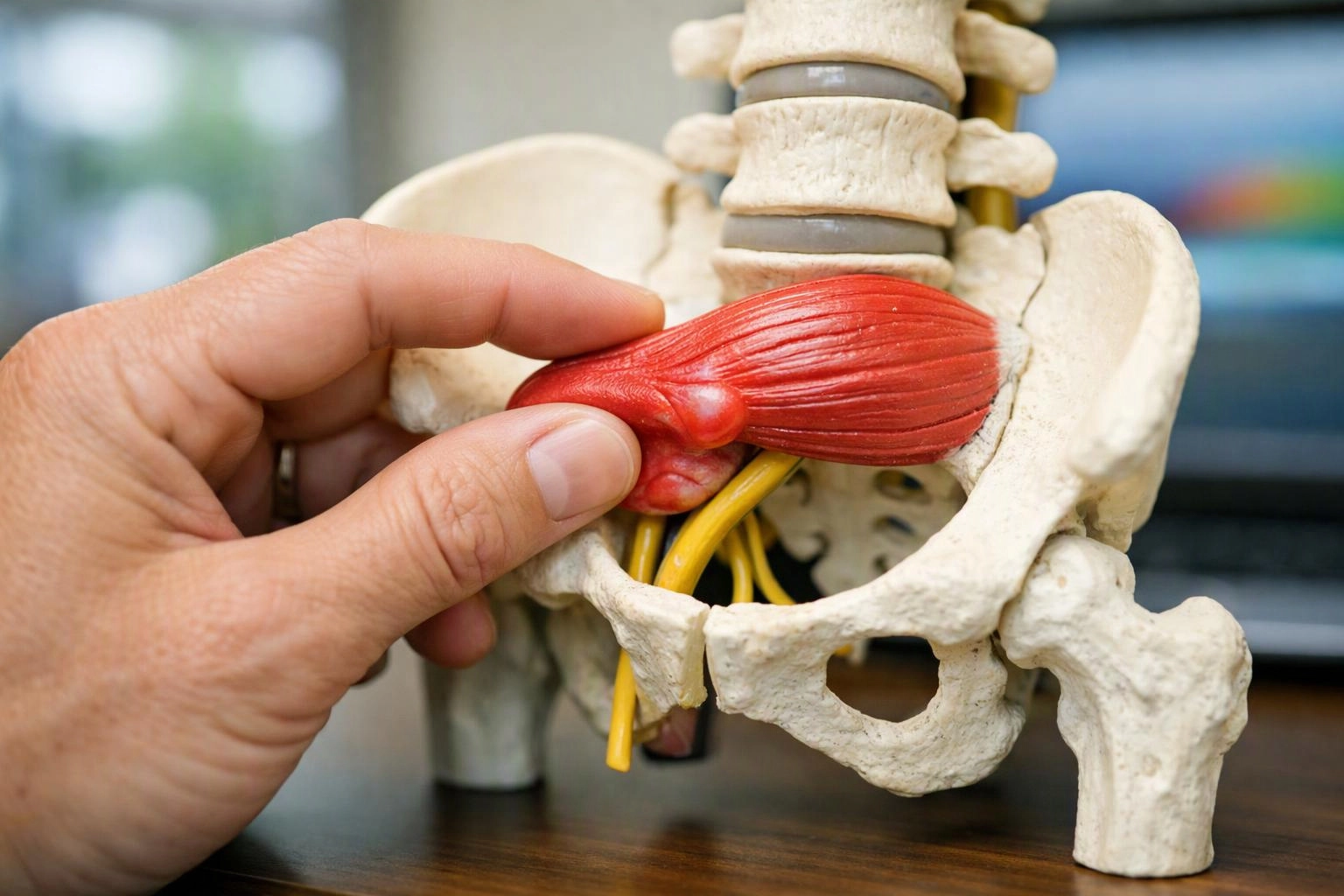
From the Arrowhead Clinic - Lithia Springs team
When we assess Piriformis Syndrome, we review the symptom pattern and examine the lumbar spine, pelvis, hip, and surrounding soft tissue. We look for findings that support local sciatic nerve irritation while checking for spinal or sacroiliac contributors. Our team connects these findings to Sciatica Treatment planning.
Piriformis Syndrome in Practice: A Real-World Example
A person may develop deep buttock pain and leg tingling after extended sitting, with symptoms changing during hip movement. A clinical assessment may examine the piriformis region and the lower back to identify the more likely source.
Related Services
Related Terms
Lumbar Spine
The lumbar spine is the lower section of the vertebral column, located between the thoracic spine…
Sacroiliac Joint
Sacroiliac Joint is the connection between the sacrum at the base of the spine and the…
Trigger Point
A Trigger Point is a sensitive area within a tight band of skeletal muscle that may…
Arrowhead Clinic - Lithia Springs
Have Questions About Piriformis Syndrome?
Contact Arrowhead Clinic - Lithia Springs for practical guidance on Piriformis Syndrome and related chiropractor work in Lithia Springs.