
What Are Growth Plates?
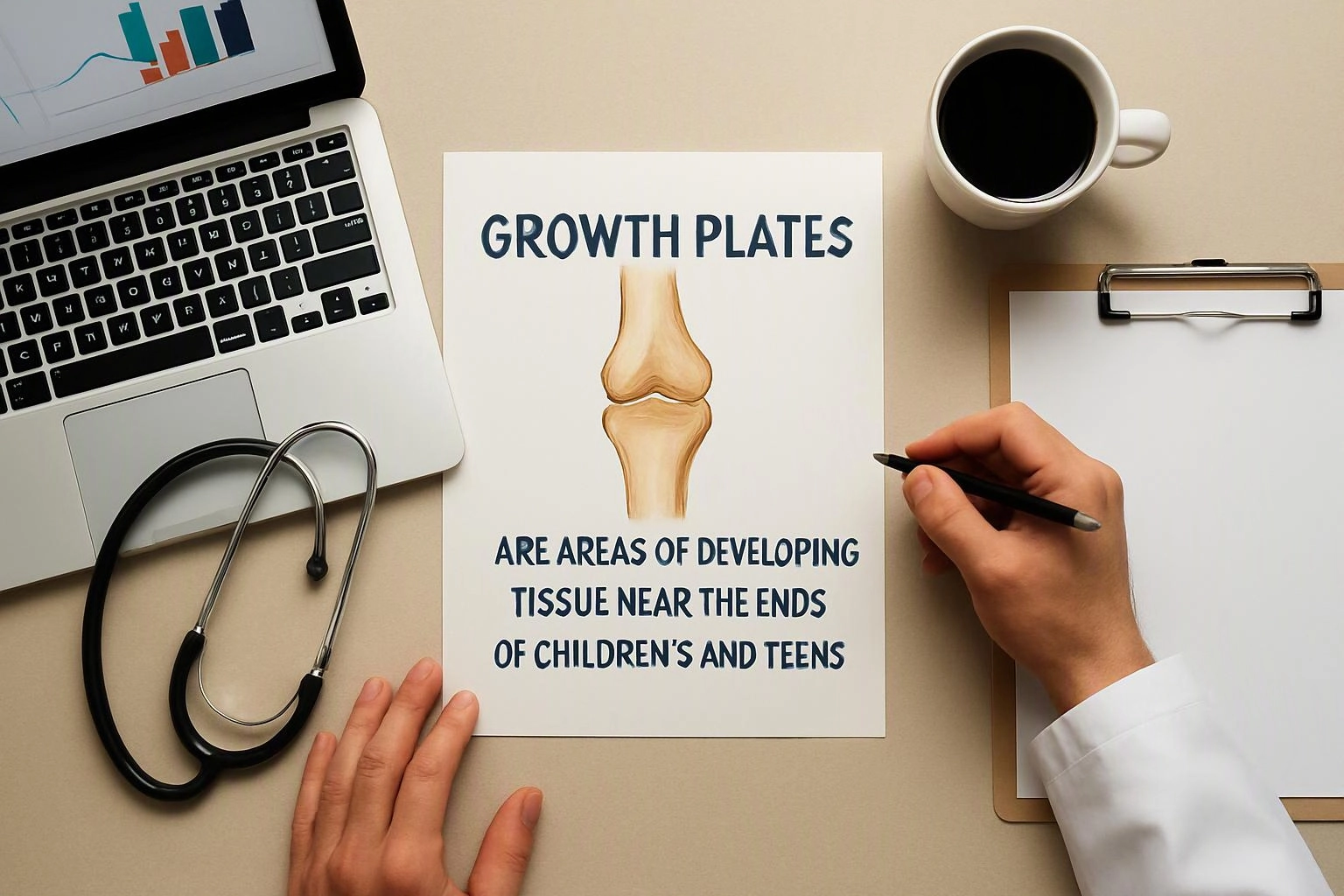
Growth Plates are areas of developing tissue near the ends of children’s and teens’ bones. They help bones grow longer during childhood and adolescence. Made of cartilage, these areas gradually change into solid bone as growth ends. Their location and development help explain why young bodies differ from mature adult bodies.
Quick Facts About Growth Plates
Category
Bone growth structure
Used for
Understanding skeletal development
Common confusion
Mistaken for adult bone ends
Also called
Epiphyseal plates, Physeal plates
Often discussed with
Pediatric Chiropractic Care
Key Takeaways About Growth Plates
- Growth plates contain cartilage during childhood and adolescence.
- They sit near the ends of developing bones.
- They are not the same as adult bone ends.
How Growth Plates Works
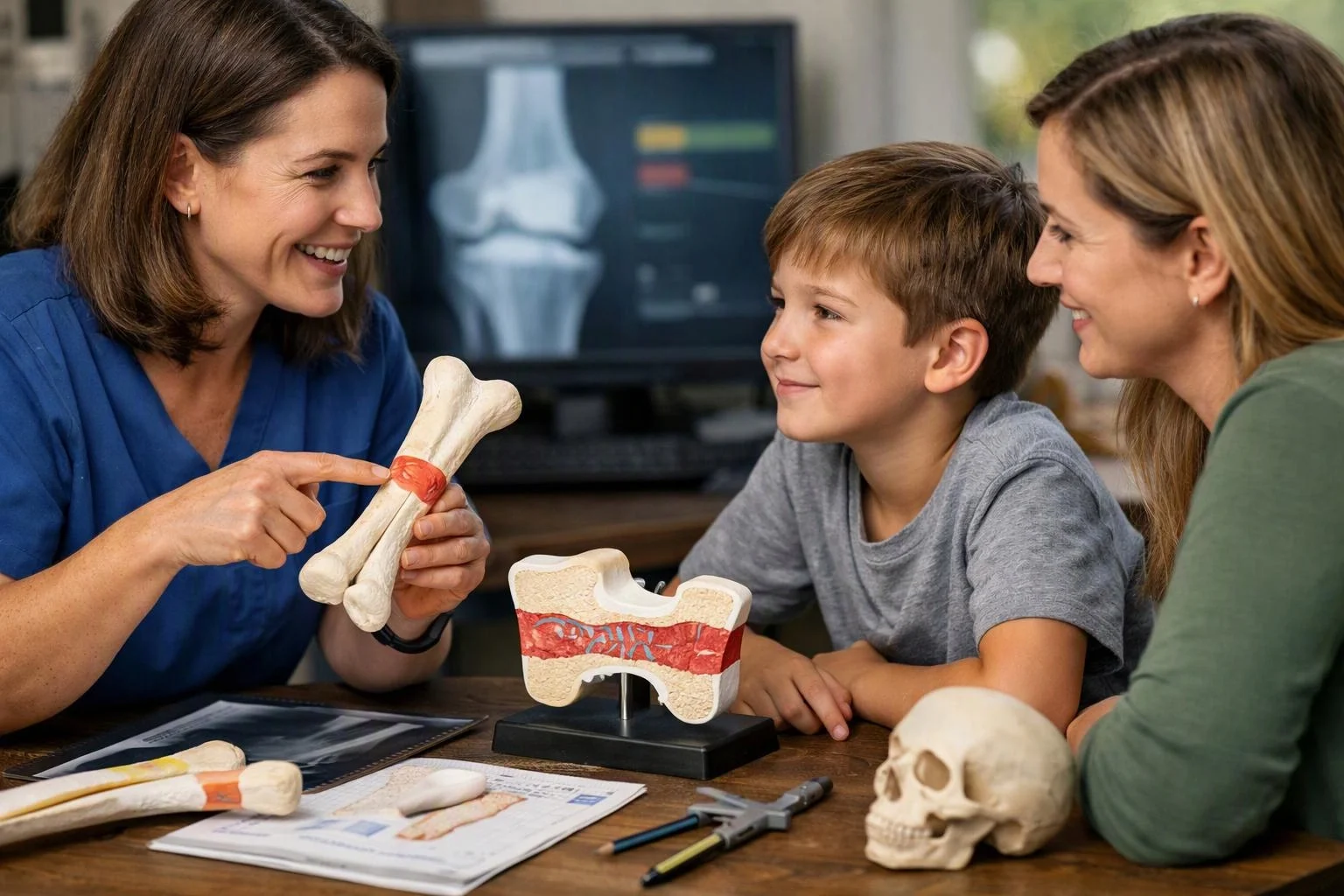
Growth Plates work as zones where new bone tissue forms during childhood and adolescence. Each plate sits near the end of a developing bone. New tissue adds length, while older tissue changes into stronger bone.
Related glossary terms: Joint Mobility, Range Of Motion, Muscle Strain.
Healthcare professionals consider a child’s age, growth pattern, movement, and reported symptoms when discussing these areas. Pediatric chiropractic care focuses on age-appropriate assessment and gentle care. The presence of a growth plate does not mean a child has an injury.
A child with a sore knee after sports may have discomfort near a developing bone. A proper evaluation helps separate growth-related concerns from muscle strain, joint irritation, or another cause.
From the Arrowhead Clinic - Lithia Springs team
When we assess a child, we consider growth and development before planning care. We ask about movement, symptoms, and recent activities. Our team uses gentle, age-appropriate methods and refers concerns for medical evaluation when they fall outside chiropractic care.
Growth Plates in Practice: A Real-World Example
A child may report knee discomfort after running or playing sports. In pediatric chiropractic care, we consider the child’s movement and growth stage while checking whether the concern may involve muscles, joints, or developing bone.
Related Services
Related Terms
Joint Mobility
Joint Mobility is the amount and quality of movement available at a joint. It describes how…
Range Of Motion
Range Of Motion is the amount a joint can move in different directions. A shoulder's range…
Muscle Strain
Muscle Strain is an injury that happens when muscle fibers or nearby tendons stretch too far…
Acute Injury
Acute Injury is a recent injury that starts suddenly after an event, such as a crash…
Arrowhead Clinic - Lithia Springs
Have Questions About Growth Plates?
Contact Arrowhead Clinic - Lithia Springs for practical guidance on Growth Plates and related chiropractor work in Lithia Springs.